Community care cannot mean Mom becomes the system
I have a list on my phone that looks like it should belong to someone who works for a human services agency.
Except I do not work for a human services agency.
I am the mother.
I am also disabled, behind on laundry, wondering whether my toddler has eaten anything besides crackers, and staring at a list of phone calls that all matter.
Medicaid care coordinator. Mental health center care coordinator. The PUNS list, Illinois’ waiting list for developmental disability services. Speech therapy. Occupational therapy. Safety bed. Housing accommodation. Possible support worker. Equipment.
Programs I only know exist because another parent said something, a therapist mentioned one quickly, or I fell down the right rabbit hole at the right time.
This is what people do not understand about getting help.
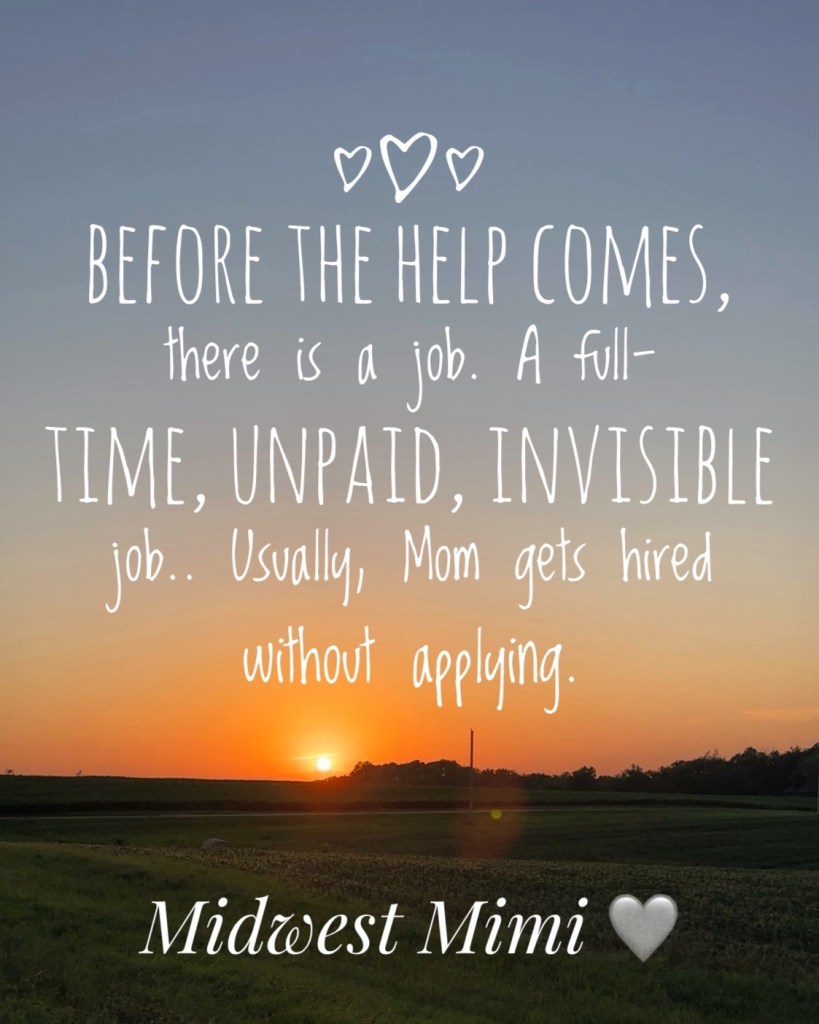
Before the help comes, there is a job.
A full-time, unpaid, invisible job.
Usually, Mom gets hired without applying.
None of this is one phone call. It is a chain of phone calls, forms, referrals, waitlists, and follow-ups.
Those calls do not happen in a quiet office with a door that closes. They happen while you are actively parenting the child who does not yet have the support you are trying to get.
You are watching the door. Redirecting the climbing. Making lunch. Tracking the toddler. Keeping one ear on the hold music and one eye on the child who still needs you every second.
You are not applying for support from outside the need.
You are applying from inside it.
I believe in community care. I believe disabled people belong in homes, neighborhoods, activities, families, and ordinary life. I believe disabled children should be supported inside their families whenever possible.
I believe in that enough to be angry when the promise is hollow.
Because community care cannot mean a family is handed a list of phone numbers and expected to build the system themselves.
I have two sons who need support.
One needs therapies, structure, and help navigating a world that expects him to know things he does not automatically know. He can learn. He can grow. He can do hard things. But he often needs more direct teaching, more repetition, and more support than people realize.
He is smart. He is funny. He is capable.
But capable does not mean unsupported.
My other son is still very young. He has delays. He is still barely verbal. He is sensory-seeking, fast, curious, and not yet able to understand danger the way the world needs him to understand danger.
For him, support is not theoretical.
Support means safety. Sleep. Equipment. Doors. Beds. Therapy. A home arranged around what his body and brain actually need.
A safety bed is not just equipment. It is a parent being able to close her eyes without calculating every possible danger in the room.
A housing accommodation is not just a request for more space. It is asking whether the home can actually hold the disability needs inside it.
A support worker is not a luxury. It can be the difference between a child participating in ordinary activities and a child being left vulnerable because he needs more help than the room is prepared to give.
I am not managing all of this from a calm and stable distance. I live with chronic illness, chronic pain, migraines, mobility limits, and a body that does not always cooperate.
But the list does not care if I am flaring. The forms do not care if I have a migraine. The voicemail does not care if I slept badly because a child slept badly.
I am fighting my own body to fight the system for my children.
By the end of some days, I have not gotten care coordinated.
I have coordinated more care.
That sounds like a joke. It is not really a joke. It is just the kind of sentence that becomes funny because the alternative is screaming.
People call parents like me strong. Sometimes that is meant kindly. Sometimes it is true.
But strength is not a service plan.
Strength does not shorten a waitlist. It does not create respite care, install safety equipment, or replace trained support.
Calling a mother strong is not the same thing as helping her carry the load.
I am not asking the system to love my children as much as I do. I know it never will.
I am asking it not to require my love to become a substitute for staffing, coordination, respite, equipment, housing, transportation, and common sense.
Love can do a lot.
But love is not infrastructure.
I know systems are overwhelmed too. Caseworkers have caseloads. Therapists have waitlists. Programs have budgets, rules, and limits.
I am not asking for magic.
I am asking for design.
If a system is so hard to access that only the most informed, persistent, resourced, and functional families can use it, then it is not serving the people with the highest need.
It is serving the people most able to survive the maze.
Parents do know their children best. That is true.
But knowing my child is not the same thing as knowing every waiver, agency, intake process, equipment path, housing rule, and appeal option.
My expertise is my child.
The system’s expertise should be the system.
So what would help?
A real starting place.
Families need a no-wrong-door disability navigator who can look at a child’s needs and say: Here are the programs. Here are the forms. Here are the waitlists. Here is what to ask for. Here is who handles equipment and respite. Here is what happens next.
Families should not have to become experts before they are allowed to receive help.
Care coordination should coordinate care.
That sounds obvious, but obvious things are apparently not guaranteed.
I am exhausted, but I am hopeful. I have talked to people who want to help. I have made calls that may lead somewhere.
But hope still takes labor.
And if a parent cannot keep making calls, the need does not disappear.
It just gets quieter on someone else’s desk.
I do not want my children institutionalized. I do not want them isolated. I want them here, in our home, in our family, in our community, with the supports that make that life possible.
That is what community care is supposed to mean.
If we believe disabled people belong in the community, then the community has to show up.
In phone calls returned. In supports explained. In coordinators who coordinate. In equipment that arrives before crisis. In housing that understands safety.
Community care cannot keep borrowing a mother’s body and calling that a system.

 Midwest Mimi
Leave a comment