When One Person Needs to Talk and the Other Needs to Shut Down
Loving Someone With a Different Nervous System
When my wife and I started dating, our conflicts were intense.
Not because the love wasn’t there. It was. From the beginning, we had never felt so seen or heard by another person. Even in difficult moments, that sense of recognition kept pulling us back together.
But we fought often, and we fought hard.
I process through talking.
She does not.
Two Ways of Seeking Safety
From the very beginning, she would ask me to stop talking during arguments.
I resisted that at first. Talking was how I regulated. Silence felt like erasure.
Over time, I began to understand her internal experience.
When conflict reaches a certain threshold, she shuts down. If she forces herself to stay engaged past that point, she loses control of what she says and does. The words become sharp, not because she wants to hurt me, but because her nervous system feels overwhelmed.
Her shutdown is not avoidance.
It is restraint.
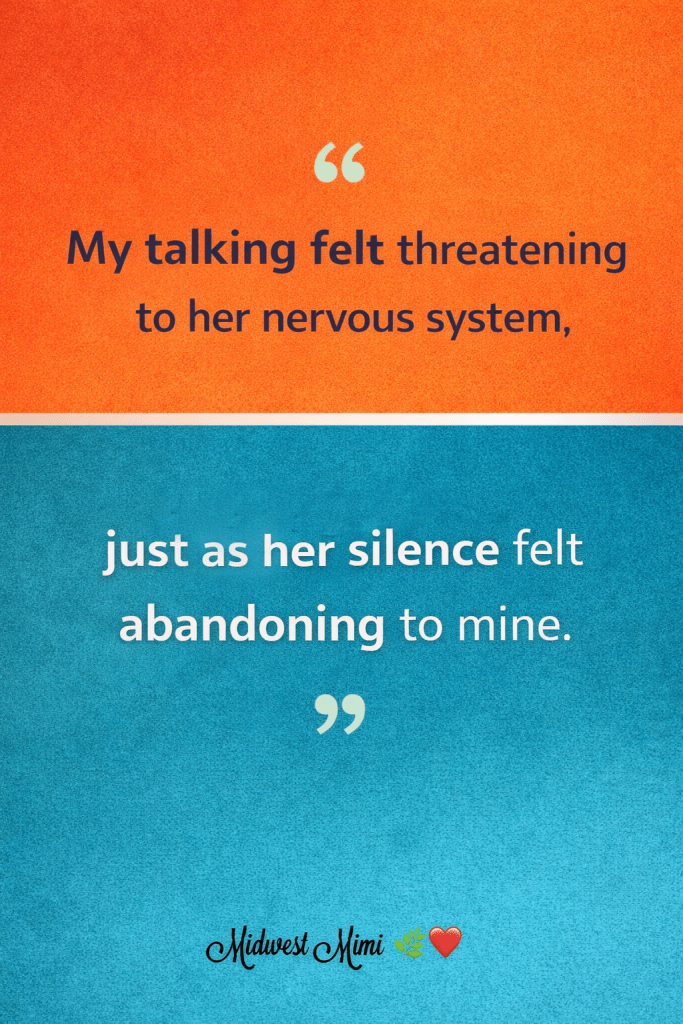
I realized that my talking felt threatening to her nervous system, just as her silence felt abandoning to mine.
Once I understood that, everything shifted.
Learning to Pause Without Disconnecting
I learned that I could still talk. I just had to wait until she was calm.
When I backed off, she could too. When I made space, she found her footing again.
Writing became my bridge.
When she shuts down now, I write everything I want to say. Then I edit it carefully. I cut the overexplaining. I focus on what actually matters. Writing helps me regulate while she gets the space her body needs.
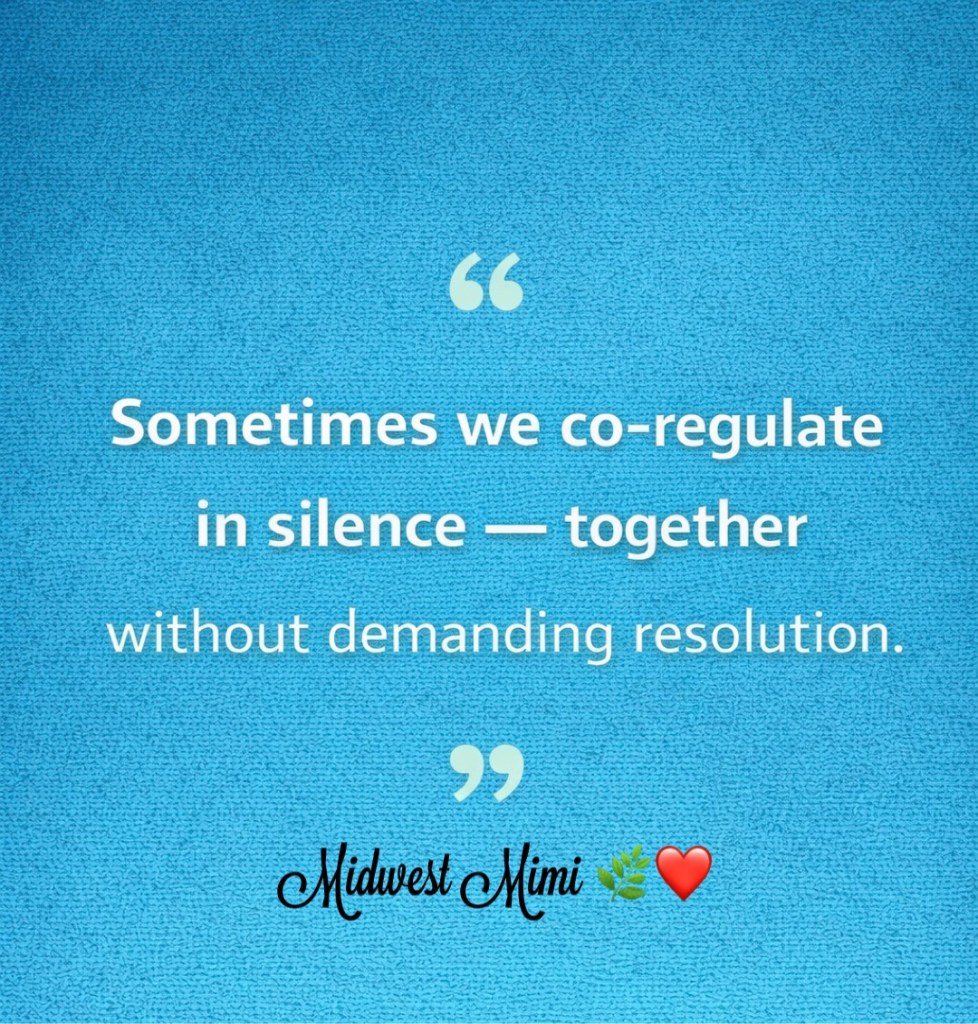
Sometimes we co-regulate in silence. She might rest or scroll on her phone. I might write nearby. We are together without demanding resolution in the moment.
When she’s ready, she comes to me with an “I love you” and a hug. That is her way of repairing. Not just the conflict itself, but the distance created by dysregulation.
Being heard later is better than being heard while we are both overwhelmed.
Seeing the Pattern in My Children
I see these same patterns in my kids.
One of my children explains everything. Her emotions are big. Her words are many. When she was younger, it sometimes sounded like a thousand excuses.
One day I was venting about it to my dad, and he laughed and said, “That sounds a lot like another little girl I once knew.”
He was right.
I was watching my own childhood replay itself.
Another child responds in the opposite way. He shuts down completely. Talking is not his regulation tool. He needs time. He processes internally. He rarely wants to talk afterward.
With both of them, I choose a different path.
With me, they are safe to be themselves. One can talk without being punished for it. The other can be quiet without being forced to perform conversation.
Neither response is wrong. They are simply different nervous systems asking for different care.
What I Know Now
Explaining is not defiance. It is an attempt to be understood. Learning how much is enough takes time and self-awareness.
Silence is not abandonment when it is protecting people from escalation.
Forcing communication while dysregulated is dangerous. It is too easy to cause harm that takes much longer to repair.
You cannot communicate while unregulated.
You regulate first.
Then you communicate.
If You’re Reading This Out of Order
If this resonated and you haven’t read Part One, it explores where these patterns began for me and why being misunderstood activates my nervous system so deeply.
Together, these two parts hold the full picture.
This isn’t a communication style for me. It’s how I stay married, parent thoughtfully, protect my health, and keep my nervous system intact.
 Midwest Mimi
Leave a comment