When I was thirteen, my family moved to southern Missouri. I left all of my established friendships eight hours away and started my teenage years surrounded by people who already knew one another.
The first Sunday we went to First Baptist Church, I walked into Sunday school wearing a green jumpsuit my mother had sewn for me. I had picked the fabric myself, along with the cat-shaped buttons that held the straps in place. I loved that outfit. I loved that I got to choose the details. Most of all, I loved that my mother had made it for me.
Then I looked around the room. The other kids knew each other from church and school. I was the obvious newcomer. I was homeschooled. I had a different accent. I was missing my friends. And suddenly I noticed something else: I was not dressed like them.
I do not remember anyone making fun of me. I do not remember anyone saying there was anything wrong with what I was wearing. But I left that room feeling like I needed to change.
That is one of the strange things about wanting to belong. Sometimes nobody has to tell you that you are different. You notice it yourself, and then you start deciding which parts of yourself might need fixing.
I thought about that memory recently when I came across something online called the Chair Theory. Imagine walking into a room where everyone is sitting around a big table. When you walk up, someone sees you coming, moves over, and pulls out a chair. Now imagine walking up to another table and nobody moves.
I like the Chair Theory because it reminds me of something I had to learn over and over when I was younger: pay attention when people show you who they are.
Someone can call you their best friend. They can tell you they care about you and promise they will always be there. Words matter, but eventually, you have to look at the pattern. Do they make room for you?
That does not mean everyone has to show friendship in exactly the same way. Some people are quiet. Some are terrible at texting. People get busy, forget things, hurt each other’s feelings, and get things wrong. One awkward moment does not tell you everything about a person. Repeated patterns tell you much more.
I wish I had understood that when I was younger. I also wish I had understood something else: not fitting easily into every group did not mean there was something wrong with me.
Friendships with girls were especially difficult for me when I was young. It was not that girls were mean to me. Most of the time, they were not. I just did not seem to understand them well enough to feel like I was really part of the group.
I remember spending a weekend with a girl from church. After lunch, her brother begged us to come out on the back porch and shoot his BB gun with him. I had my own BB gun at home and was a good shot, so that sounded fun to me. We went outside, and I was having a good time.
She was bored almost immediately, so I pretended I would rather go back inside and watch TV with her than stay outside shooting with her brother, even though I did not.
Nothing terrible happened. Nobody was mean to me. But I remember that kind of moment because it happened in different ways over and over. I was often trying to figure out what girls my age were interested in, how I was supposed to act, and what version of me would make the most sense beside them.
I got along with boys more easily, and for a long time I thought that probably said something about me. It did, I suppose. Just not what I thought. I needed more time to figure myself out.
Sometimes not belonging means someone is treating you badly. Sometimes it just means you have not found your people yet. And sometimes it means you are still figuring out who you are.
Like a lot of people, especially in junior high and high school, I tried different versions of myself along the way. I dressed differently. I showed interest in things that did not really interest me. I worked harder to please people when I especially wanted them to like me.
When you are not sure who you are yet, it is very easy to look around the room and let everyone else answer that question for you.
That was what I was doing in that Sunday school room. I had walked in wearing something I loved and walked out wondering whether loving it had been a mistake. It was what I was doing on that back porch too. I had been having fun until I noticed she was not. Then I changed my answer.
When someone does not pull out a chair, it is easy to assume you are the reason. Maybe I am too weird. Maybe I talk too much. Maybe I do not talk enough. Maybe if I dress differently, like different things, or try a little harder, they will want me here.
This is not about keeping score of who texts first or deciding that anyone who leaves you out once is a bad friend. It is about noticing when you are doing more and more work just to feel like you have a place.
Being yourself does not mean never changing. We all have things to learn. We still have to listen, apologize when we hurt someone, and become better friends.
But growing is different from pretending.
Belonging means there is room for the person you actually are. You can have a filter. You can consider other people’s feelings. You can change your mind and grow without constantly worrying that being honest about who you are will cost you your seat.
It took me longer than I would have liked to become comfortable with that person. It also took time for me to find my footing in friendships with women. Eventually, I did. There was nothing wrong with me because it took longer.
Age helped. Experience helped. But mostly, knowing myself helped. Because something interesting happens when you actually like the person you are: you become less desperate for everyone else to like you.
That makes it easier to pay attention to what people are showing you. You can appreciate the people who make room for you. You can recognize when a friendship simply is not the right fit without deciding either person must be awful. You can also notice when you have been trying so hard to earn a place that you forgot to ask whether you even like the table.
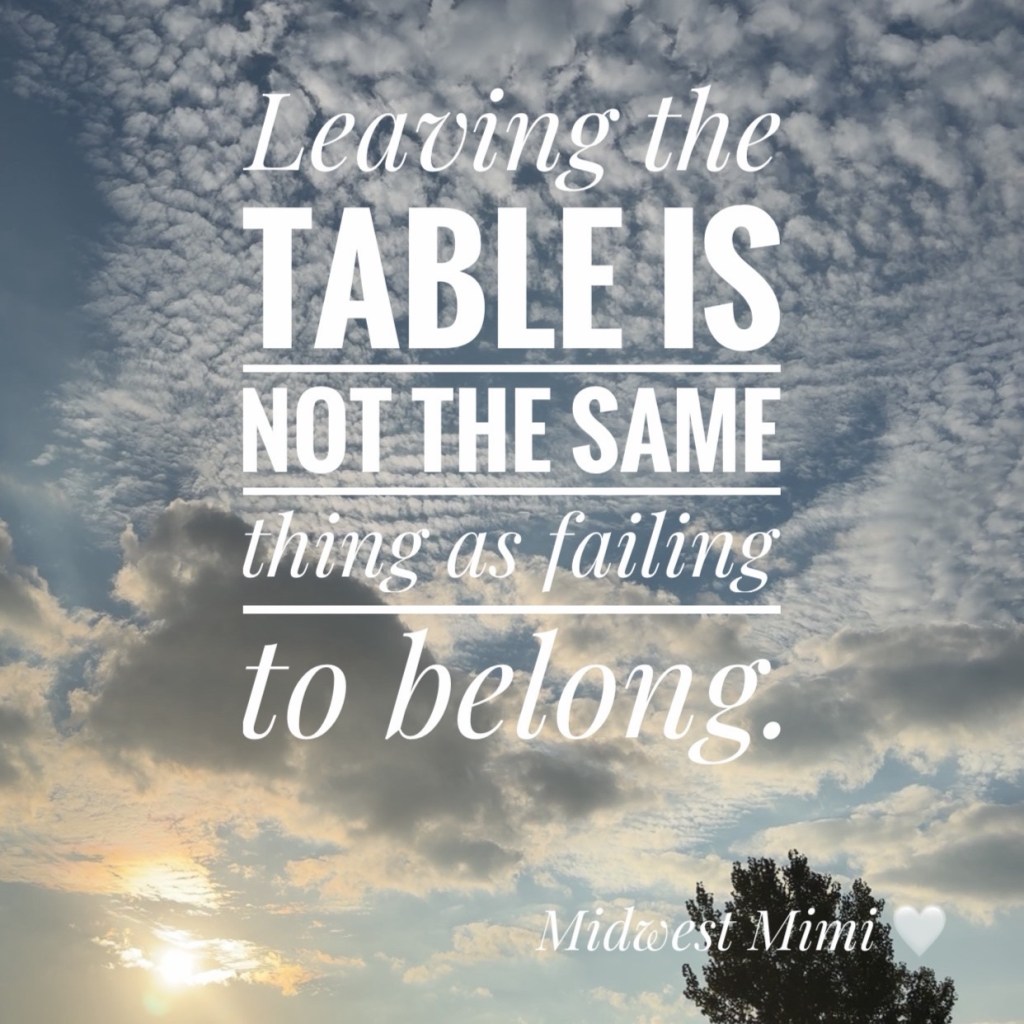
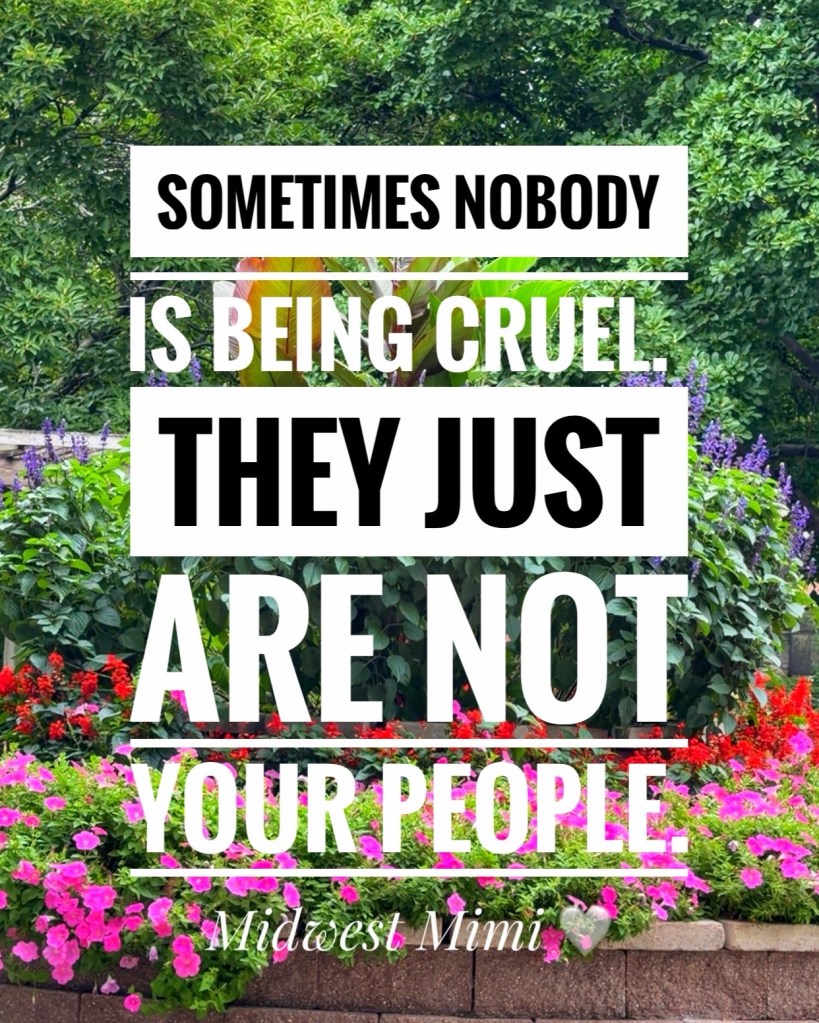
Sometimes nobody is being cruel. They just are not your people. That can hurt too. But leaving the table is not the same thing as failing to belong.
There are other tables.
And sometimes finding the right one starts with knowing you do not have to become somebody else to earn a seat.
 Midwest Mimi
Leave a comment