The nurse handed my newborn daughter to my mother first.
Her dad cut the umbilical cord, and then my mom carried her over and placed her in my arms.
She was so tiny.
She had dark hair and fair skin like me, wide-open eyes that were still a deep gray, and little pointed ears that looked like mine, too. Because she had been born early, there was soft fuzz across her shoulders, ears, and forehead.
For years, I teased her that she looked like a baby werewolf.
That day, all I could think was, She is perfect.
We had kept her name secret through the entire pregnancy. Only her dad and I knew what we planned to call her. Once she was finally here, even the doctor wanted an answer.
“Can we know her name now?”
“Raeleigh,” I said.
Then I realized there was a problem.
“I don’t know how to spell it. Ask my mom.”
My mother was standing right there.
I had just become someone’s mother, and I still needed mine.
I did not know then how often those two identities would exist inside me at the same time.
I thought becoming a mother was a threshold I had just crossed. I did not yet understand that raising a daughter would keep changing the way I understood being a woman. It would make me reconsider the girl I had been, the woman I was becoming, and eventually the mother who had just placed my daughter into my arms.
I could not have known that sixteen years later, I would be watching that tiny baby become a young woman of her own.
And I certainly could not have known that my mother would not be here to see all of it.
Holding Rae changed the way I looked backward at my own life.
Every scar I carried started to look like a map I did not want her to follow.
I thought about the times I had stayed quiet to keep the peace. The things I had accepted because I thought being strong meant enduring them.
None of those choices belonged only to me anymore.
There was a little girl watching.
I could tell Rae that her voice mattered, that her body belonged to her, that she deserved respect, and that she did not have to make herself smaller for other people. But she was also watching how I talked about myself, what I tolerated, and whether I lived by the things I was teaching her.
Eventually, I understood that I had to believe those things about myself, too.
Having a daughter was both terrifying and sacred. It made me want to protect her from everything and, at the same time, light the whole world on fire so she could walk through it unburned.
But I could not do that.
I could not walk ahead of her forever, clearing every sharp thing from the road. I could not build a world that would never hurt her.
All I could do was give her what I had, try to give her better where I could, and trust that one day she would know what to do with it.
And some of what I had to give her did not start with me.
My mother believed deeply in education, but not simply in knowing the right answers.
She wanted us to know how to think.
She spent our childhood homeschooling us because she wanted us to have the kind of education she believed children deserved. She raised readers. She raised children who looked things up, asked questions, challenged ideas, and wanted to understand why something was true instead of accepting it simply because an adult said so.
She gave us a love of learning and taught us to seek knowledge for ourselves.
I did not fully understand then what an enormous gift that was.
Now I see pieces of that inheritance in Rae.
Rae has strong opinions and an almost immovable sense of justice. She will argue her position, question yours, and is not easily convinced just because someone older or louder insists they know better.
Sometimes when I watch her, I can see the line connecting the three of us.
My mother raised me to think.
I raised Rae to think.
And Rae took that inheritance and made it entirely her own.
Some of my mother made it through me and into Rae.
But Rae has never simply been a collection of what we gave her.
When she was little, she had a pair of cowgirl boots she was convinced went with every dress she owned.
It did not matter what color the dress was or where we were going. In Rae’s mind, the boots worked.
I let her wear them.
Maybe that should have told me something about the girl I was raising.
She has always had her own ideas about who she is.
There are quieter pieces of little-girl Rae I miss even more.
For years, I did her hair every weekend.
Protective styles took time. She would sit while I worked through her hair, section by section, week after week. What began as another thing a mother does to care for her child became ours.
It was mother-daughter time.
I treasured it.
I miss it now.
Rae does her own hair these days.
There was no final weekend when I knew it was the last time. I did not finish her hair, put down the comb, and think, Remember this. You will never do this for your little girl again.
Those endings rarely announce themselves.
One day your daughter needs you to do her hair.
Then one day she does not.
Somehow, while I was busy raising her, Rae grew up.
She is sixteen now and has already graduated from high school. She has been working since she was twelve. She talks about barber school, about building a career, about the life she intends to make for herself.
Sometimes I look at her and think, When did you become this person?
Not because I do not recognize her.
Because I do.
The little girl who knew exactly which boots belonged with every dress grew into a young woman who still has very definite ideas about how things should be done.
She has been becoming herself in front of me all along.
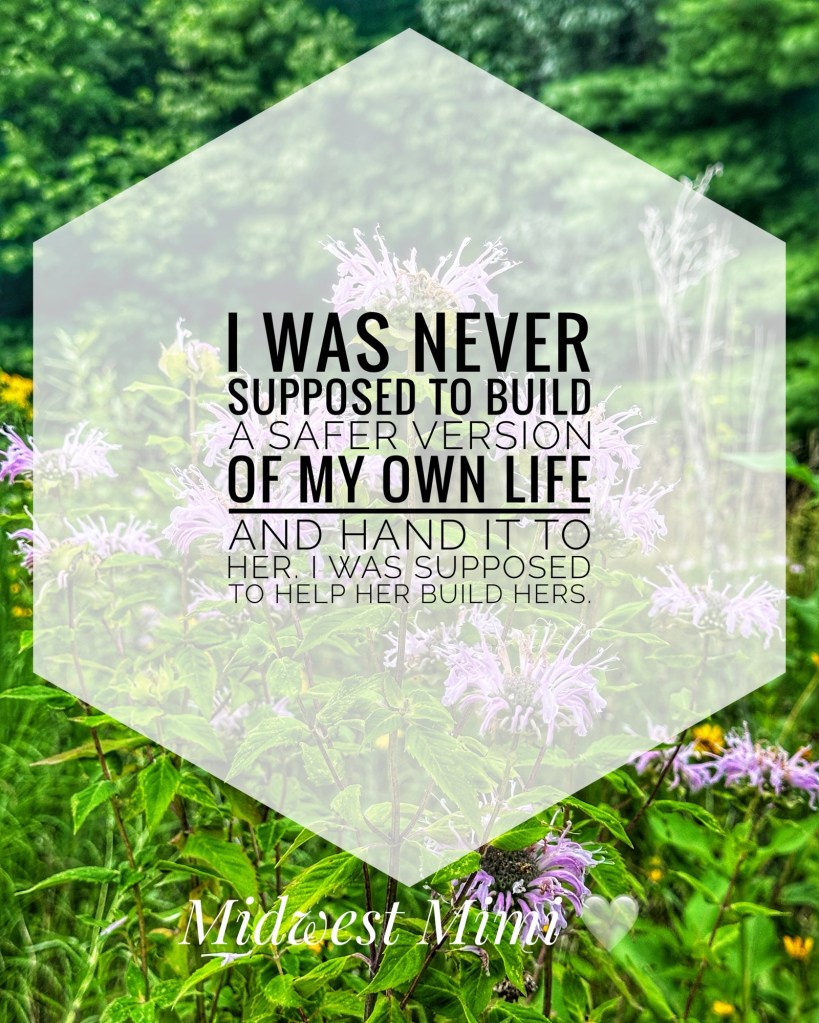
I spent so much of my own life learning things the hard way that I wanted desperately to keep her from having to do the same. But I was never supposed to build a safer version of my own life and hand it to her.
I was supposed to help her build hers.
There is a strange grief tucked inside watching your child become independent. You spend years teaching them to need you less, and then one day you look up and realize it worked.
Watching it happen has made me understand my own mother differently.
Early-onset Alzheimer’s took my mom from me at sixty-five.
Sometimes that number still makes me angry.
Sixty-five was not enough.
It was not enough time for me to have my mother, and it was not enough time for Rae to have her Nana.
I grieve those things separately sometimes.
I grieve all the years I should have been able to call my mom and ask questions I did not know I would have yet.
And I grieve what Rae lost.
She should have had more years with the woman whose influence is woven through her life.
Sometimes the things I miss most are the ordinary ones. The little things about my mother that seemed almost too ordinary to matter when she was still here.
My mom cried at sad scenes in movies.
She cried at difficult chapters in books.
Give her a sad enough story and the tears would come, and I would tease her about it.
She always gave me the same answer.
“Life experience.”
She would look at me with a watery smile and say, “Someday you will have enough life experience to understand.”
I didn’t understand.
Not then.
The life experience that finally taught me was losing her.
Now I know what it is to carry grief that does not stay neatly attached to the person you lost.
It follows you into ordinary places. A song. A sentence in a book. A mother dying in a movie who isn’t your mother at all.
And suddenly, there are tears.
The same kind of tears I used to tease her for.
I find myself doing it now, crying over stories in ways I never did before I lost her. Sometimes what I am watching is not even particularly close to my own story. It does not have to be.
Grief recognizes grief.
Once you know what it feels like to lose someone you cannot replace, fictional loss stops feeling entirely fictional.
Sometimes I wish I could tell my mom that I finally understand.
I wish I could sit beside her through one more sad movie and feel my own eyes fill while hers do.
I can almost see the watery smile she would give me.
And together we would say, “Life experience.”
She was right.
I just wish the life experience that taught me hadn’t been losing her.
Maybe that is part of becoming, too.
I used to think becoming a woman was something that happened once.
You grew up. You became an adult. That was it.
Now I know there is no finished version of us.
We keep becoming.
I became Rae’s mother while I was still becoming myself.
Now I am becoming the mother of a young woman who does her own hair, argues her own convictions, works for what she wants, and is building a life of her own.
Rae will have her own versions of herself, too.
She will make choices I would not make. She will believe things I did not teach her. She will change her mind. She will discover things about herself that I could never have predicted when my mother first placed her in my arms.
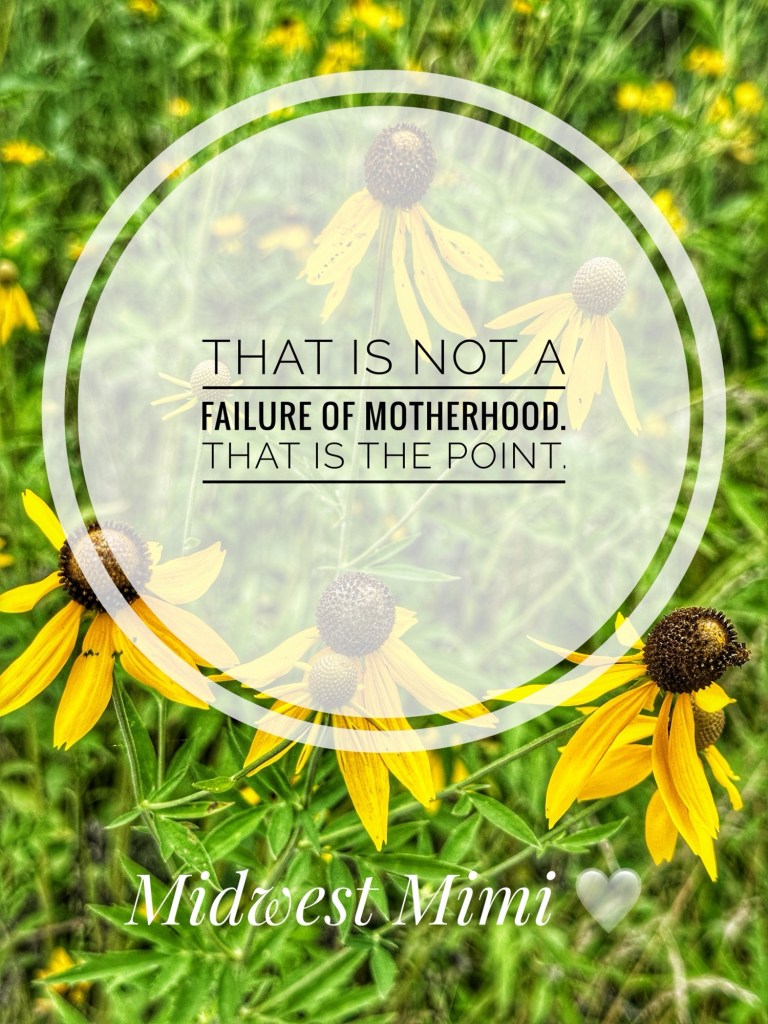
That is not a failure of motherhood.
That is the point.
I was never supposed to create another version of myself.
I was supposed to give her somewhere safe enough to become Rae.
One day she will understand things about me that she cannot understand yet. She will look back at something I said a hundred times and suddenly hear it differently because life has given her the experience to understand it.
I hope she gets to tell me when that happens.
I hope I am here to give her a watery smile and say, “Life experience.”
Becoming Rae’s mother did not mean I stopped being my mother’s daughter.
My mother placed Rae in my arms that day. I did not know yet how much of her I would carry with me into motherhood.
I wish she could see us now.
I wish she could see what became of that tiny baby with the dark hair, fuzzy shoulders, pointed ears, and little baby-werewolf face I teased her about for years: the fierce young woman she is now.
I wish she could see what became of the things she gave me, and what Rae has made entirely her own.
There are still questions I wish I could ask my mom. Moments with Rae that make me wish I could pick up the phone and say, Mom, you will never believe what your granddaughter did.
I want one more sad movie beside her.
I want the years we did not get.
Because after all these years of becoming Rae’s mother, I find myself wishing, more than anything, to still be my mother’s daughter.
 Midwest Mimi
Leave a comment