When my daughter was five, I had a migraine so bad I could barely lift my head.
She was still little enough to have round cheeks and small hands, but old enough to understand that something was wrong. I do not remember every detail of that day. Migraine pain can blur the edges of memory. But I remember Rae deciding she was going to take care of everything.
Not because anyone asked her to.
Because she saw a gap, and she stepped into it.
That has been Rae ever since.
Years later, when she was a preteen, I was asleep during a flare. The kind that drops a curtain over your body and makes ordinary parenting feel like trying to move through wet cement. Rae tried to make macaroni and cheese for her brother.
She did almost everything right.
She boiled the noodles. She drained the pot. She mixed in the milk, butter, and cheese. Then she forgot to turn off the burner.
By the time she realized, the macaroni on the bottom had burned. She was devastated. Not because it was only macaroni and cheese, but because in her mind, she had failed at the thing she was trying so hard to do.
She did not want to wake me up.
So she picked the good noodles off the top and fed her brother. There was not much left for herself.
That is the part that still hurts me.
Not the burned pan. Not the mistake. Not even the meal. It is the image of my daughter standing there, small and responsible, deciding that taking care of her brother mattered more than taking care of herself.
I am proud of the girl she is.
I hate that she had to become her so early.
That image came back to me while reading Demon Copperhead.
Not because Rae is Demon. Not because our lives are the same.
Because the book understands something I recognized immediately: children can become fluent in survival before they ever get to feel safe.
Barbara Kingsolver’s novel is a reimagining of David Copperfield, set in modern Appalachia, where a boy named Demon grows up inside poverty, addiction, foster care, neglect, and a region the rest of the country has learned to stereotype instead of understand.
Demon is funny. Sharp. Observant. Alive.
He is not written as a symbol of poverty or a lesson in resilience. He is a child with a voice. A child with hunger and pride and talent and longing. A child who keeps adapting because the adults and systems around him keep failing.
That is what got me.
Not because my children’s lives are the same as Demon’s. They are not. My children are deeply loved. They have adults who fight for them. They have a home full of jokes, snacks, siblings, pets, porch noise, garden pots, and people who keep choosing each other.
But the book still touched a bruise I recognized.
Demon learns survival as a language. He learns how to read a room. How to expect disappointment. How to make himself useful. How to keep going when the people responsible for protecting him do not have enough capacity, compassion, money, or power to do it well.
And I thought of Rae.
I thought of my five-year-old daughter deciding she could take care of everything because I had a migraine.
I thought of her as a preteen, standing over a burned pot of macaroni and cheese, picking the edible noodles off the top so her brother could still eat.
I thought about how survival skills can look like character traits if you do not ask where they came from.
Responsible. Mature. Resilient. Helpful. Strong.
Those words are not lies. Rae is responsible. She is mature. She is resilient. She is helpful. She is strong.
But she is also silly. Artistic. Crafty. Always making something out of almost nothing.
She saves little things I might mistake for trash and treats them like treasure. Broken bits of accessories. Found pieces. Plain objects waiting to become something else. She can take a bare wooden end table and imagine it painted for her room. She can turn scraps into hair clips and bows. She has always had an eye for possibility, for what something could become if someone bothered to see it differently.
That is Rae too.
Not just the girl who helps.
The girl who creates.
The girl who finds beauty in the discarded.
Maybe that is part of why this hurts. Because the same child who could turn broken pieces into something lovely also learned to do that with life itself.
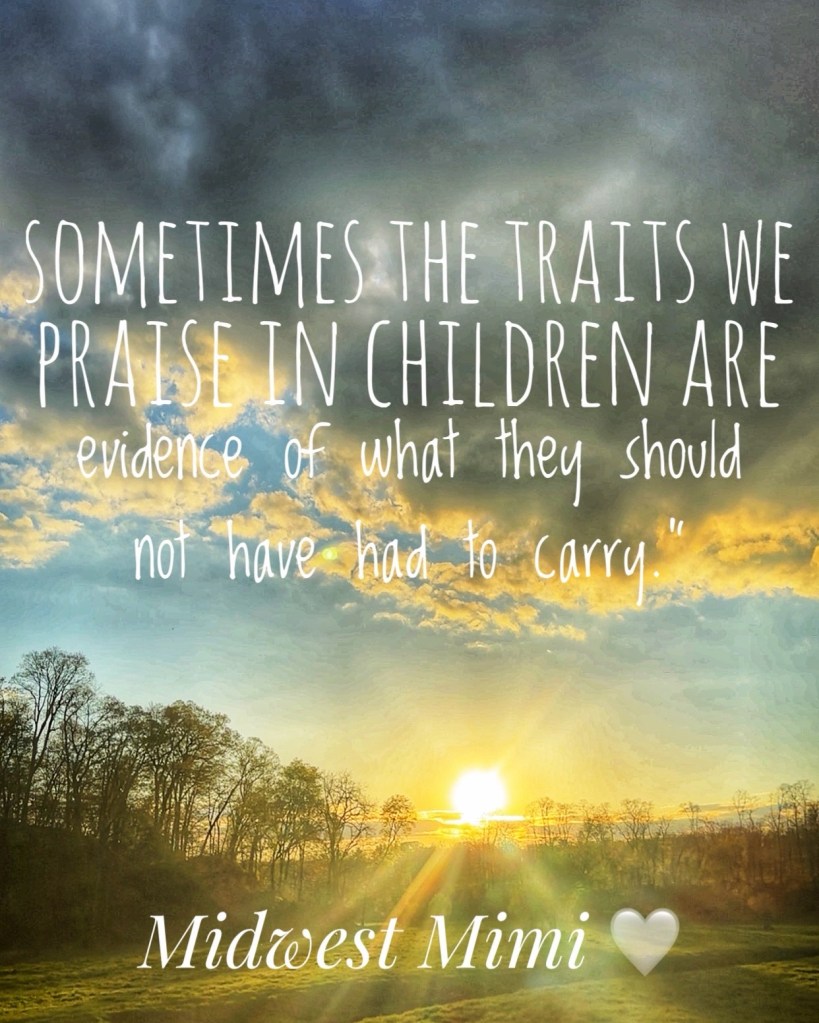
Demon Copperhead reminded me that sometimes the traits we praise in children are evidence of what they should not have had to carry.
Responsible children are often praised by the same world that made them responsible too soon.
My children have survived things children should not have to become talented at surviving.
Not one thing. Many things.
They are mixed-race children in a world that still asks mixed-race children to explain themselves. They have two mothers in a world where some people still treat our family as something to debate instead of something to respect. They have grown up poor in a country that often talks about poverty like it is a personal failure instead of a condition families are forced to survive.
They have lived through housing instability, too many moves, and fresh starts that were not adventures, but survival plans. They have lived in unsafe neighborhoods where childhood includes learning the difference between fireworks, cars backfiring, and gunshots. They are neurodivergent kids in systems that were not built for their brains or bodies.
And they have a medically disabled mother. A mother who loves them with her whole heart, but whose body does not always cooperate with the life she wants to give them.
That is a lot for children to translate.
The moods of adults. The rules of systems. The difference between what a family needs and what help is available. The quiet calculation of when to ask, when to wait, and when to make do.
Rae, especially, has always translated too much.
She can read a room. She can read my face. She can feel the energy shift in a house and start solving problems before anyone asks. She notices what needs to be done. She helps with her brothers. She tries to make things easier.
I love that about her.
I worry what it cost her.
Because disposability does not always look like someone walking away.
Sometimes it looks like underfunded schools, unsafe neighborhoods, medical systems that exhaust already exhausted parents, and support systems that make families prove need again and again before offering help.
It looks like neurodivergent children being treated as problems to manage instead of people to understand. It looks like mixed-race children being asked, over and over, what they are. It looks like children with two mothers learning early that some people will treat their family as a question. It looks like poor families being judged for surviving conditions they did not create.
My children are not disposable.
But they are growing up in a world that often treats children like mine as if endurance should be enough.
That is why the language of resilience can bother me.
Not because resilience is bad.
Resilience has helped my family survive. It has helped my children adapt. It has helped us keep going through poverty, disability, instability, fear, and systems that were never built with us in mind.
But resilience is not the same as protection.
Survival is not the same as safety.
And a child should not have to be exceptional in order to make it through childhood.
We love to praise strong children. We call them old souls. We admire their maturity. We tell stories about how much they overcame.
But sometimes “mature for her age” means a child learned early that adults had limits.
Sometimes “she is such a good helper” means a daughter figured out that being useful was one way to make the people she loved safer.
Sometimes “resilient” is the word we use when we do not want to look too closely at what a child had to endure.
I do not believe Rae is broken. I do not believe poverty means a family lacks love. I do not believe resilience is bad.
And I do not believe our family is only trauma.
We are not.
We are porch laughter and inside jokes. We are late-night snacks and toddlers covered in frosting. We are siblings teasing each other. We are loud kids, soft blankets, messy kitchens, garden pots, birthday cakes, car rides, therapy appointments, library books, and the daily miracle of people still choosing each other.
We are a family that has struggled, yes.
But struggle is not the same as failure.
Poverty is not a moral failure. Disability is not a moral failure. Needing help is not a moral failure. Raising children inside systems that were not built for them does not mean a family lacks love.
Still, my children have paid a price.
That is the truth I do not want to soften so much that it disappears.
My kids have learned how to adapt. They have learned how to read danger, manage disappointment, stretch resources, start over, and keep going.
I am proud of them.
I am also angry that they needed those skills so young.
Especially Rae.
Because there is a particular ache in watching a daughter become useful before she gets to be carefree. There is a particular grief in realizing that the same tenderness that makes her loving also made her easy to count on.
She saw need, and she answered it again and again.
I have counted on her. That is true.
It has not always been fair. That is true too.
I can say that without making myself a villain and without making her childhood a tragedy. Families under pressure survive together. But children should not have to become load-bearing beams.
The repair is not pretending otherwise.
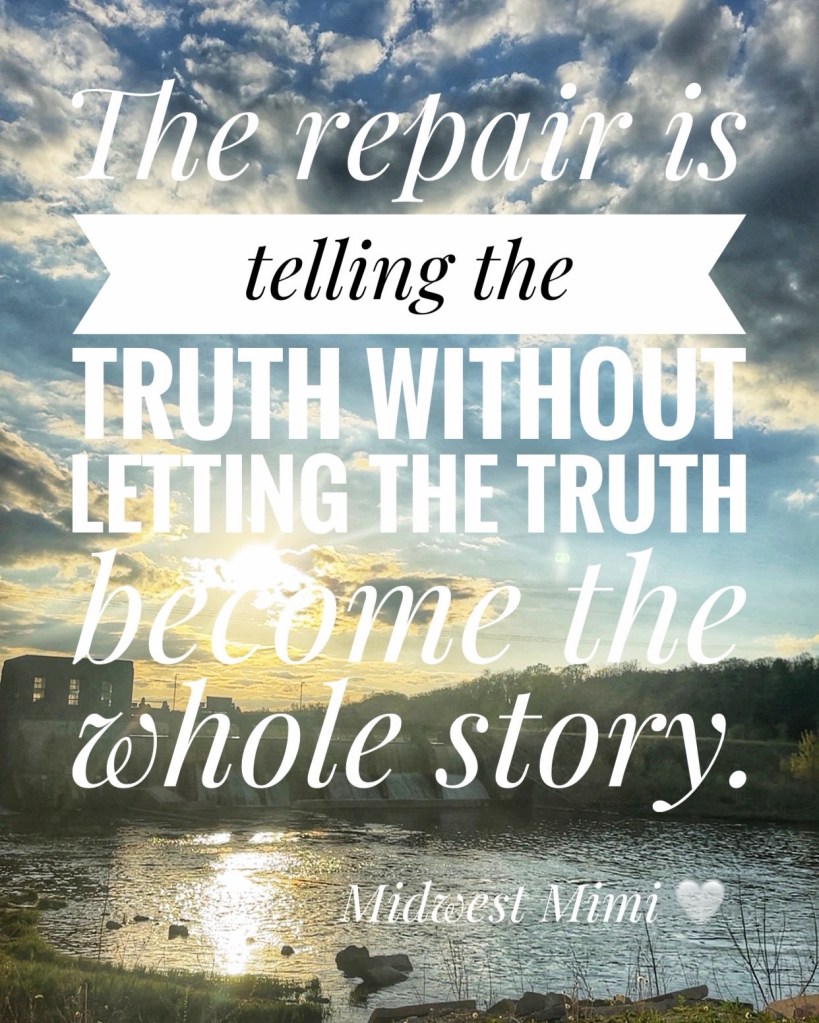
The repair is telling the truth without letting the truth become the whole story.
I want Rae to know I saw her.
I saw the five-year-old who wanted to take care of everything because Mama had a migraine.
I saw the preteen who burned the macaroni and cheese and still tried to make sure her brother ate.
I saw the girl who became responsible before she should have had to understand responsibility that deeply.
But I also see the artist. The maker. The silly girl. The one who finds tiny treasures and turns them into something beautiful. The one who deserved to be seen not only for what she could carry, but for what she could create.
I want her to know that I am proud of her strength, but I do not only love her for being strong.
I love her when she helps.
I love her when she does not.
I love her when she is impressive.
I love her when she is overwhelmed.
I love her when she is the big sister.
I love her when she is just Rae.
That is what Demon Copperhead brought to the surface for me.
Not because it told my family’s exact story.
Because it gave language to a grief I already carried.
It made me think about the difference between a child being strong and a child being required to be strong. It made me think about the way adults praise resilience when what we should be building is relief. It made me think about my own children, who have grown up deeply loved but not always protected from the weight of the world.
I do not want to turn my children into inspiration.
I want them to have support.
I want them to have softness.
I want them to have futures bigger than what they survived.
I cannot undo every hard thing.
I cannot go back and unburn the macaroni.
I cannot give Rae back every moment when she felt she had to be older than she was.
But I can keep trying to build a life where survival is not my children’s main talent.
A life where strength is something they can use, not something they have to wear every minute.
A life where responsibility is not proof of love.
A life where there is still room for childhood.
Still room for rest.
Still room for joy.
Still room for hope.
 Midwest Mimi
Leave a comment