Caregiving is not just loving people. It is remembering what everyone needs before something falls apart.
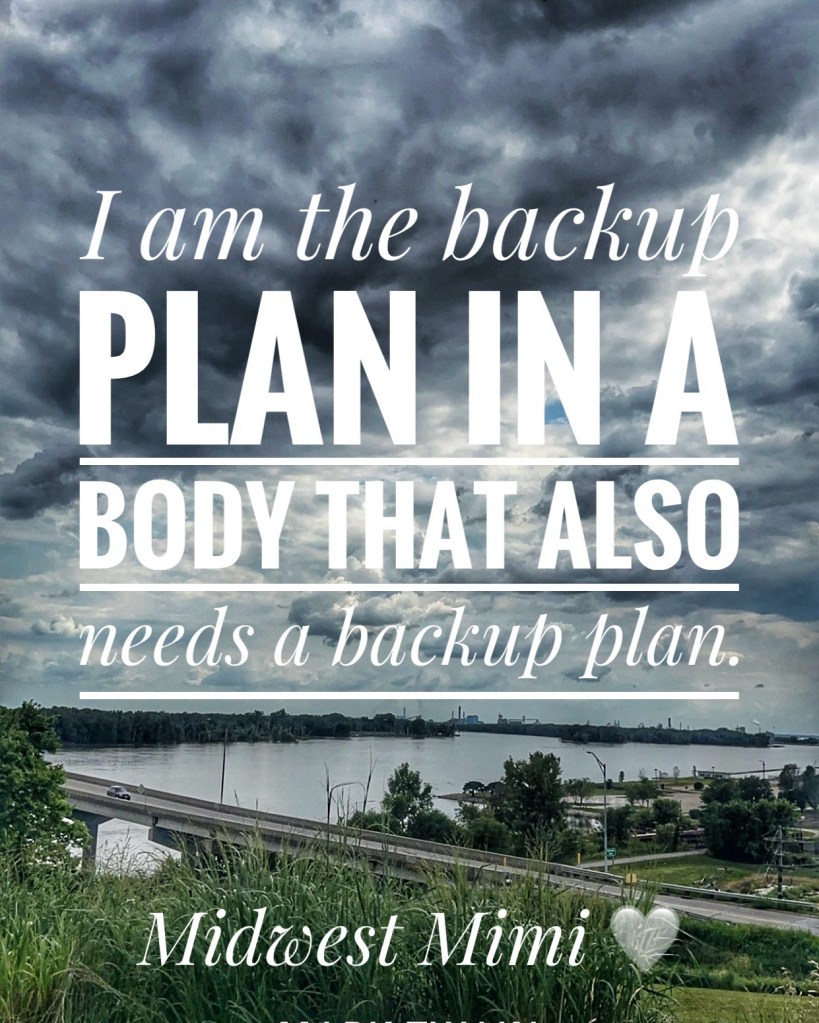
I am the backup plan in a body that also needs a backup plan.
That is the part people do not always understand.
There is this idea that staying home means rest. Or at least ease. People have said things to me like, “I would love to be able to stay home, but I have to work.”
And I get what they mean.
But I also think: this is not as fun as you think it is.
People see me at home and assume I have reached some state of leisure. They might see me on the porch, or writing from the couch, or ordering groceries from my phone, and think that means I am not working.
They do not see the calendar alerts.
They do not see the paperwork stacks.
They do not see the mental notes.
They do not see the nervous system held together by reminders.
At least four days a week are usually booked with appointments, therapies, errands, paperwork, phone calls, school needs, medication refills, bills, house problems, or someone needing something handled. Even on a “light” week, if we only have the boys’ therapies, that still means five therapists we work with.
That does not include doctors, medications, school, state paperwork, groceries, landlord calls, bills, or the daily work of keeping five people fed, scheduled, regulated, and moving in the same general direction.
I do not just stay home.
I manage the map.
In any given week, I am managing health, education, paperwork, benefits, transportation, and basic household needs for five different people. That means therapies, doctors, medications, school planning, SNAP and housing paperwork, grocery orders, bills, landlord repairs, and a rotating cast of offices that all need forms, phone calls, follow-ups, or documentation.
Then somewhere inside all of that, I am also trying to write, make art, grow Midwest Mimi, build something for our future, and not lose myself completely inside the logistics of everyone else’s needs.
That is not a complaint.
It is a job description.
And then there are the needs that do not fit neatly on a calendar.
Finding help when something goes beyond our budget. Equipment. Clothing. Coats for the kids. Household needs. Transportation problems. Money shortfalls. Neighborhood kid issues. Flare days. Vertigo. Someone’s sleep falling apart. Someone’s regulation falling apart. The house itself falling apart a little faster than I can keep up.

Caregiving is not just loving people.
It is logistics.
It is remembering who needs a refill before the bottle is empty.
It is knowing which therapist comes on which day.
It is tracking who has an appointment, which bill is due, which benefit needs renewed, which child needs school support, which medication has to be picked up, and which repair request still has not been handled.
It is being the person who knows where the forms are.
The person who knows who to call.
The person who knows what happens if something gets missed.
Other people in my house help. I want to be very clear about that.
The kids help. Thy helps. They do the things they can do, and that matters. It is a blessing. I do not dismiss it.
But helping with pieces is not the same as carrying the whole map.
There is a different weight to being the person who holds the plan.
That is the part that wears me down sometimes. Not because I think I am the only capable person in the house. Not because no one cares. But because I am the best communicator. I am the one who knows how to talk to systems, doctors, agencies, landlords, schools, therapists, and offices. I am the one who can usually explain the need, ask the question, fill out the form, follow up, and keep pushing.
That skill matters.
It also means there is not a true backup for a lot of what I do.
Thy helps, and she is capable. But English was not the language of her childhood home, and her parents were navigating these systems as immigrants themselves. A lot of the paperwork-and-agency confidence people take for granted was not handed down to her. So the complicated communication usually comes back to me.
And most of the time, I can do it.
Until I cannot.
Because my body has limits too.
When I had vertigo for several days, I had to reschedule quite a few things. That was necessary. I could not push through everything just because the calendar wanted me to.
But rescheduling does not make the work disappear.
It moves it.
Now my entire month of June is basically already booked on a daily basis because the things I had to drop still have to be picked back up.
That is what happens when I fall behind.
Someone misses an appointment. A therapy gets rescheduled. School gets behind. Medication runs low. Paperwork gets delayed. The house gets chaotic. Then I have to recover enough to fix the things that slipped while I was busy being a human body instead of a family management system.
That is the invisible part.
People see the appointment when we show up.
They do not always see the reminder I set, the paperwork I filled out, the call I made, the transportation I planned, the meltdown I tried to prevent, the snack I packed, the medication I checked, the schedule I rearranged, or the recovery time I did not actually have.
They see me at home.
They do not see the work it takes to make home function.
There are days I am the calendar.
There are days I am the case manager.
There are days I am the backup plan.
Most days, I am all three.
And I am doing it inside a body that also needs care, rest, treatment, pacing, medication, mobility aids, and room to fall apart occasionally without taking the whole system down with it.
That is the hard part.
Not loving my family. Loving them is the easy part.
The hard part is the logistics of love.
The hard part is knowing that if I do not remember, something may not happen.
The hard part is knowing that if I am too sick, too dizzy, too flared, too foggy, or too exhausted, there may not be another adult who can simply step into the full shape of what I do.
Pieces, yes.
The full map, no.
This is work.
Unpaid work.
Invisible work.
Work that does not always look like work because it happens through phone calls, text reminders, calendar alerts, grocery orders, therapy schedules, paperwork stacks, mental notes, and the constant quiet scanning of what might fall apart next.
It is the work behind the work.
It is the reason a child gets to therapy.
The reason medication gets refilled.
The reason benefits stay active.
The reason there is food in the house.
The reason appointments get rescheduled instead of lost completely.
The reason the system keeps moving, even if it limps.
I am grateful I can do it.
I am also tired from doing it.
Both can be true.
I know my role matters. I know my family needs what I carry. I know there is dignity in being the person who can communicate, organize, advocate, and make a plan when everything gets complicated.
But I also know that a family should not have to run on one person’s memory and nervous system.
Especially when that person’s body is already asking for mercy.
So when people imagine staying home as some soft, restful life, I want them to understand that home can be a workplace too.
A disabled mother at home is not automatically resting.
Sometimes she is managing five lives from the couch with a migraine, a calendar, a phone, and a nervous system held together with reminders.
Sometimes she is rescheduling therapies during vertigo.
Sometimes she is ordering groceries because standing in a store would cost too much.
Sometimes she is filling out paperwork with brain fog because the deadline does not care about her body.
That is not leisure.
That is labor.
And I am naming it because the work counts, even when no one clocks it, pays for it, or sees the whole map.
 Midwest Mimi
Leave a comment