My body held the evidence of illness and survival. Other people read it as failure.
When my daughter was fourteen, she came home from the neighbor’s house upset.
The kids had been watching some YouTube skit with puppets. One of them was supposed to be a crackhead, or a meth head, or some other cartoon version of a white-trash druggie.
Big white woman. Missing front tooth. A joke with a body attached to it.
One of the adults there looked at the screen and said, “Look, it’s that white lady next door.”
Meaning me.
My neighbor shut it down fast. Said that was rude. Said I was sick and had an old injury. Reminded her my kids were right there.
The woman got quiet after that. Embarrassed, probably.
But by then it did not matter.
The sorting had already happened.
That is how it works when poverty and illness show up on your body in visible ways. People decide what you are before you open your mouth.
They see the missing front tooth. The damaged skin. The heavy body. The tired face.
They do not see autoimmune disease, chronic pain, dry mouth from medication, or the years it takes to get poor, sick, and female suffering taken seriously.
They see evidence of failure and call it character.
The irony is, I knew exactly what was happening in my body.
I knew enough anatomy to understand the body that was failing me. I had taken Anatomy and Physiology as a prerequisite for graduate school in physical therapy. I had gotten into the program. Then my body collapsed hard enough that I had to give that future back.
Before that, I had worked in healthcare as a pharmacy tech and later as a medical secretary on a psych ward. I spoke the language of the people who were sorting me. I could read the codes on my own chart, but I could not scrub the social meaning off my own skin.
What followed was nearly a decade of fighting to be believed.
Years of doctors minimizing symptoms that were real, measurable, and eventually diagnosable. Years of reading labs, tracking patterns, and learning the language they respected so I could force them to hear what plain pain had not been enough to say.
That kind of education changes the humiliation, but it does not prevent it.
It only means you can describe it more precisely.
You can know why your mouth is dry and still be judged by your teeth.
You can know why your skin is inflamed and scarred and still be stared at in Walmart.
You can know the physiology of pain and still watch a doctor’s face close a little when they decide, before they know you, what kind of patient you must be.
My body tells a story.
Just not the one strangers think they are reading.
I had learned long before the missing tooth that when the wrong people misread your life, the consequences are not just social. They can become official.
When my oldest daughter was a baby, we were referred to Early Intervention because she was born seven weeks early. Around that same time, I was headed toward gallbladder surgery after pregnancy wrecked it. Before she was born, doctors kept me on opiates to control the pain and keep things calm long enough that she would not come any earlier.
After she was born, she twitched and shook while withdrawing from the medication.
I can still see her tiny body doing what the doctors said might happen. I can still feel the helplessness of knowing the medication had kept her inside me longer and still left her with something to survive after she arrived.
People like to talk about help as if it arrives clean.
Neutral.
Generous.
They like to pretend there are only two kinds of parents: the ones who accept help and the ones who recklessly refuse it.
That has never been how it worked in my life.
At the time, I was still with her father. I was still trying to make that relationship into something stable enough to raise a child inside.
The upstairs room where I kept Rae and her things felt calm.
The rest of the house did not.
Downstairs, there was music. Ashtrays. Trash. Weed. People in and out. That stale, smoky smell that sits in fabric and tells on a house before anyone has said a word.
Even my own mother was not allowed inside.
Because when Early Intervention was offered, I did not picture support.
I pictured scrutiny.
I pictured someone standing in my doorway taking in the mess, the smell, the traffic, the instability, and fitting us into a category before I finished answering the first question.
Premature baby. Young mother. Medication withdrawal. Chaotic house. Weed. People in and out.
I knew what that added up to in the mind of a mandatory reporter.
So I said no.
Not because I did not care.
Because I did.
That is the part people miss when they talk about poor mothers and bad choices. Sometimes a choice is not between good and bad. Sometimes it is between exposure and concealment. Between inviting a system inside and trying to keep one small part of your life from being misread by someone with the power to write it down forever.
Help is not always help when it comes with surveillance attached.
Sometimes help is inspection and exposure.
Sometimes help is a woman with a clipboard standing in your doorway while you try to calculate how much of your real life is safe to let her see.
From the outside, my refusal might have looked irresponsible.
Inside the life, it was risk assessment.
I have made other choices like that. Choices that looked ugly from the outside and were still the most survivable option available.
I took pain medication during pregnancy because uncontrolled gallbladder pain might have pushed me into earlier labor. I chose doctors carefully. I used marijuana because long before I had language for autism or sensory regulation, I knew it quieted something in my nervous system that otherwise became unbearable.
I was medicating a nervous system I did not yet have a name for.
Later, I chose medical marijuana over opioids because I understood the long-term cost to the body, and because I had already spent too many years watching the medical system confuse compliance with wisdom.
That gap, between what a choice looks like and what it actually is, has shaped my whole life.
I did not know I was autistic until my late thirties. By then a lot had already happened. Trauma. Years of masking. Years of expecting my body to perform like a body with different wiring, different limits, and fewer accumulated injuries.
I could see difference in my daughter before I could name it in myself.
In trying to understand her, I started to understand the architecture of my own collapse too.
What some people called laziness was burnout.
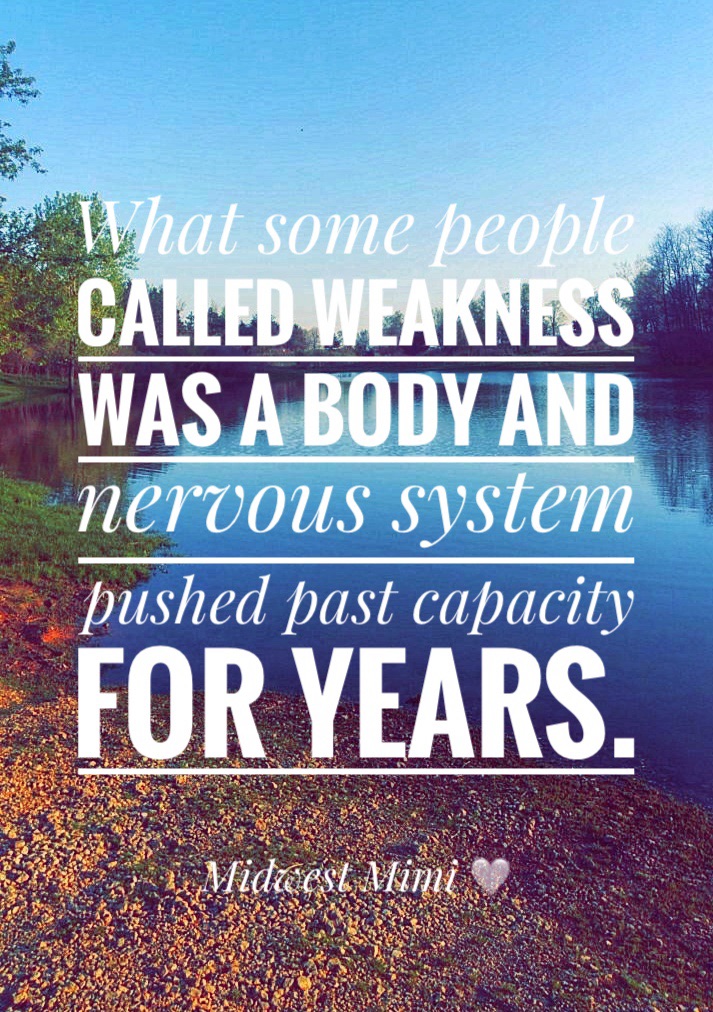
What some people called weakness was a body and nervous system pushed past capacity for years.
What some people called dysfunction was often the visible aftermath of surviving too much for too long.
The missing tooth worked the same way.
People read it as a type.
A joke.
A moral clue.
What it actually was, for years, was a barrier.
I have walked into job interviews already qualified and watched the interaction shift once they really looked at me. Missing a front tooth is not cosmetic when it changes whether employers, doctors, or strangers read you as competent, credible, or worth treating gently.
On paper, a missing front tooth could be called cosmetic.
On a form, it could be reduced to appearance.
But the form was not the one sitting across from an employer watching their eyes flicker to my mouth. Medicaid could call it cosmetic because Medicaid was not the one living inside the social meaning of that gap.
Soon, after about eight years, I am finally getting a partial.
I am glad.
But I keep thinking about what it means that a small piece of acrylic and metal can change the way the world receives the exact same woman.
Same mind.
Same history.
Same diagnoses.
Same endurance.
But a different first impression, and sometimes that is all the world bothers to read.
That is what stays with me.
Not just that one rude woman saw a puppet and thought of me. It is how quickly the category was available to her. How little distance there was between visible damage and moral judgment. How ready people are to treat survival like confession when it shows up on the body in ways they do not find respectable.
I was a mother making calculations inside conditions other people were lucky enough never to understand.
I was a sick woman learning enough science to survive dismissal.
I was a person trying to protect my children, manage pain, navigate poverty, and keep some version of dignity in systems that reward polish and punish visible struggle.
People looked at my body and saw a punchline.
I looked at the same body and saw evidence.
And I was right.
 Midwest Mimi
Leave a comment