I almost died once.
Not in a dramatic, movie-style way. No flashing lights or swelling music. Just a quiet, terrifying unraveling I didn’t even recognize was happening. I told myself I was fine. Just a headache. Just tired, I thought. I’d sleep it off.
But I wasn’t fine. And if I had gone to sleep, I never would have woken up again.
The Night Everything Changed
I remember sitting there, foggy and disoriented, trying to convince Thy that I just needed rest. She kept looking at me like something didn’t add up. My words came out wrong, my thoughts dissolving before they even formed. It was like trying to scoop water with a sieve; every thought slipped away before I could articulate it.
My limbs felt like they were encased in concrete, every movement a battle. My head throbbed, each pulse like a lightning strike. Somewhere inside, I knew something was wrong, but the fog was too thick to care.
Thy called my dad, hoping maybe he could convince me. He asked a few questions, then told her, “If she won’t go, call 911.”
That’s when she gave me the look that said, “I’m not playing with you right now.” She told me I could either walk to the car, or she was calling an ambulance.
So I put on my shoes. Not because I felt capable, but because I didn’t want to be carried out on a stretcher in front of my kids.
That’s the last thing I remember.
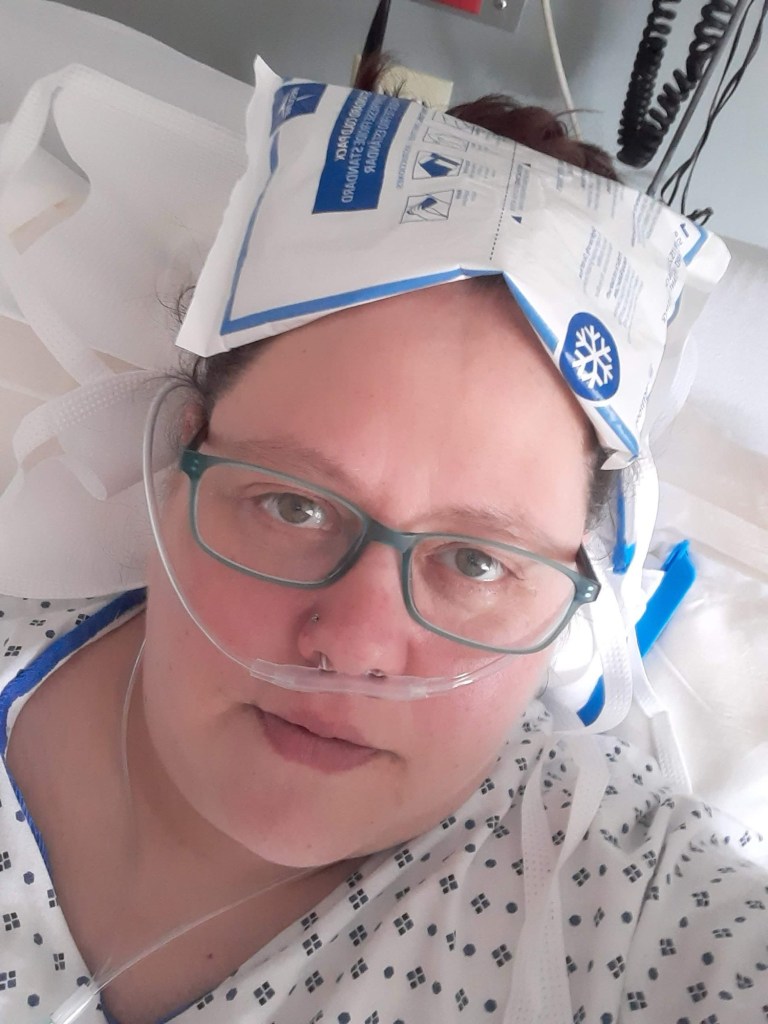
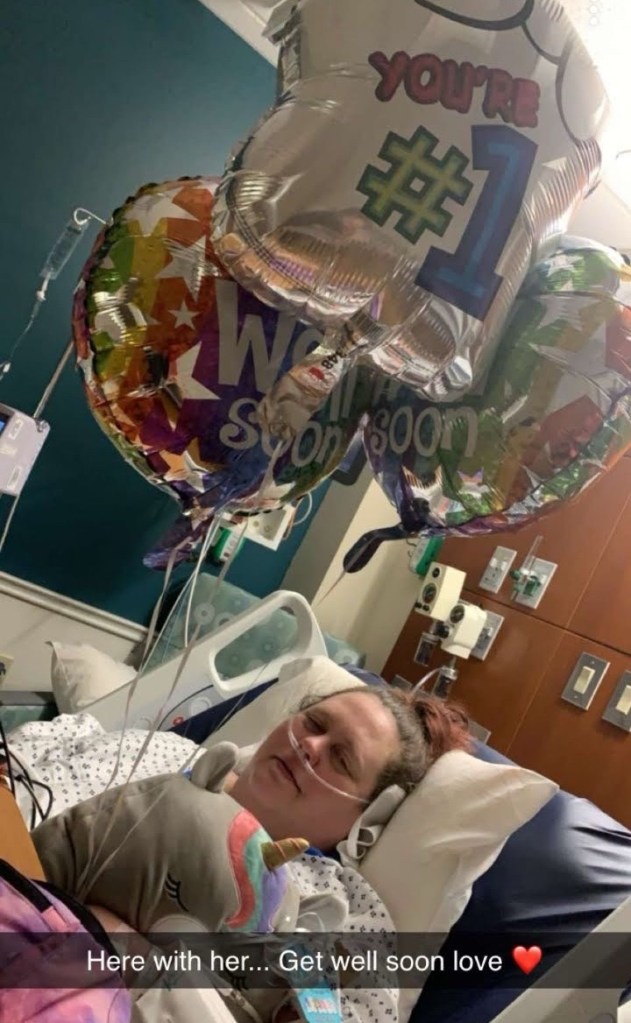
When I woke up three days later, my mouth was so dry I could barely swallow. My lips were cracked and sore from being on a non-invasive ventilator.
I looked around groggily and saw I was connected to machines and wires. I had gone into respiratory failure. My body had simply stopped being able to keep up.
Respiratory failure was blamed on polypharmacy and unresolved sleep apnea, a dangerous mix that had quietly built up until my body couldn’t recover on its own.
Waking Up to a Different Kind of Life
When I opened my eyes again, I could feel the air filling my lungs on its own — cool, real, unassisted. Not the forced push of the ventilator. That quiet, simple breath was the first sign that I was still here.
Coming that close to death strips away all the excuses. You see your life laid bare.
Lying there, I realized something simple but life-changing: I had spent years surviving instead of living, always running on fumes, always waiting for life to get better. When this happens, then life will be better, I’d tell myself.
Before that night, I had been feeling sorry for myself, grieving the life I lost when I became chronically ill. I kept waiting for the old version of me to come back, for my body to cooperate again, for my strength to return. But the truth hit me hard: I didn’t have to be cured to start living again. I just had to start living.
That realization changed everything.
When you almost lose everything, you stop waiting for someday. You stop measuring your worth by what you can do or how “normal” your life is. You start noticing the things you used to overlook, like being able to breathe on your own, to hug your kids, to watch them grow.
There’s no perfect moment waiting out there. There’s only now and what we choose to do with it.
What Changed After That
The changes didn’t happen overnight. Healing took time. But that moment, that line between life and death, set everything in motion.
I didn’t come out of that hospital with a perfect plan, just a quiet promise to do things differently.
I moved closer to family.
Thy and I talked and decided we needed to be closer to family. We missed my brother and nephew, and she had felt so alone when I was in the hospital. I wanted my kids to spend time with their cousins, and I wanted to be around my brother again.
It was a safety net of love, being surrounded by people who knew and loved us. So we moved back to the city where I grew up. It wasn’t about going backward. It was about returning to what truly mattered.
I lost 90 pounds, not to be smaller but to live longer.
For most of my life, I had seen weight loss as something I would get around to. When I became sick, my weight increased because of limited mobility and medications that caused weight gain. After nearly dying, it became something different: a promise to myself.
I realized it wasn’t just for me. I wanted to see my children grow up. I wanted to breathe easier and give my already damaged joints a bit of a break.
The number on the scale doesn’t matter to me as much as the feeling of doing something, anything, that gave me back a little control over my health. I couldn’t cure myself by losing weight, but I wasn’t going to ignore it anymore either.
I started creating again.
Before getting sick, I loved creating, both art and with words. But somewhere along the way, the exhaustion and living in survival mode stole that part of me. I told myself I didn’t have time to create, or that no one cared what a broken person had to say.
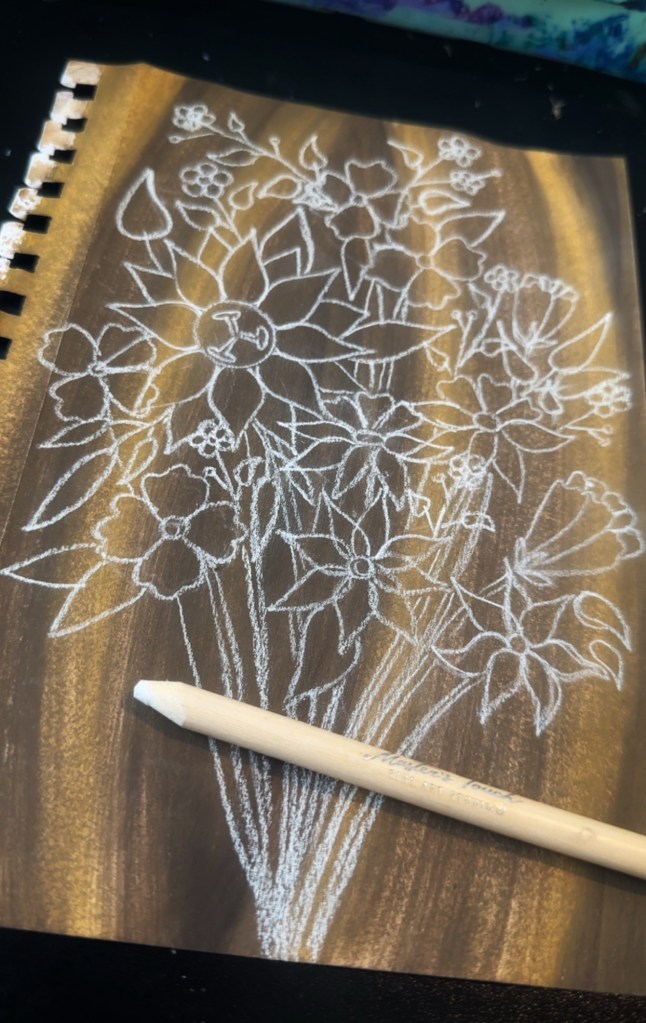
Art came first: sketching, painting, and pouring my feelings onto paper. It quieted my mind and gave shape to emotions I hadn’t been able to speak.
Writing followed soon after. It started as journaling, a way to process the things I had lived through, but over time it became something more, a way to make meaning out of what nearly broke me.
Creating again became proof that I was still alive.
I married the woman who saved my life, and we had a baby boy who completed our family.
There’s something about almost losing everything that clarifies what and who really matters.
As I recovered, I realized how much I loved this family we had built. Not long after, we were expecting our son, Royce, the baby boy who would complete our family. Recognizing that life offers no guarantees, we decided we weren’t waiting for a grand ceremony.
We got married the day before he was born, just the two of us at the courthouse. Every time he throws his little arms around me in a hug or laughs those deep baby belly laughs, I’m reminded that I got another chance, not just to live, but to mother, to nurture, and to show my kids what resilience looks like up close.
I made peace with my best friend.
Like others in my life, when I got sick my best friend didn’t always understand what I was going through. And then she started dating my brother, which caused a rift between us.
After almost dying, I realized how fragile relationships really are. It opened my eyes to how good she was for my brother, and how good he was for her. We didn’t just repair our relationship; we strengthened it.
When I attended their wedding reception, I realized how lucky I was to call her not just my friend, but my sister.
I cut out what doesn’t bring me peace.
Surviving taught me that peace is non-negotiable.
I stopped entertaining chaos, overexplaining myself, or staying in spaces that drained me.
Now, if it costs me my peace, it costs too much.
That boundary doesn’t come from bitterness. It comes from gratitude. Because peace feels a lot like oxygen. You don’t realize how much you need it until it’s gone.
What I Know Now
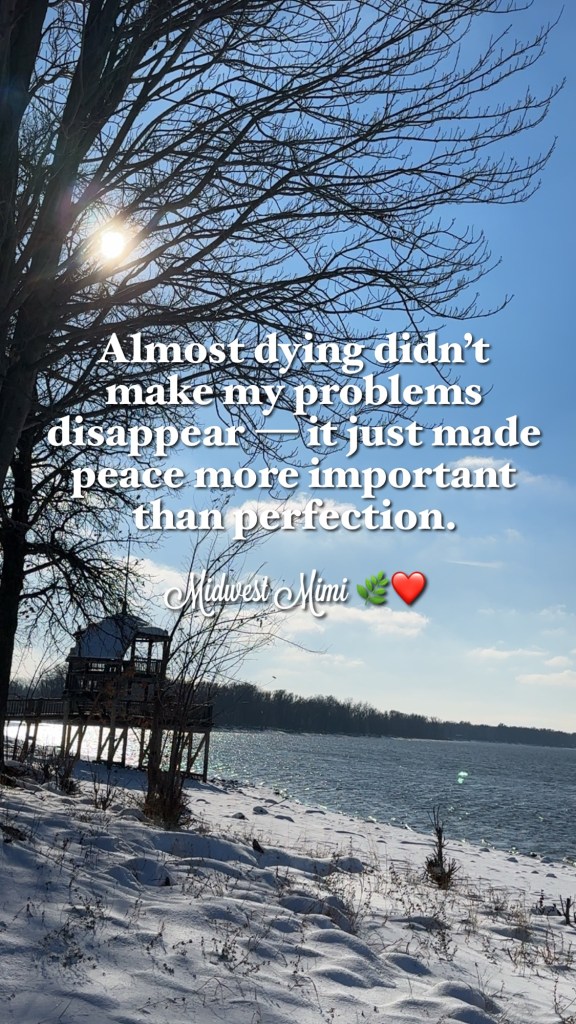
Nearly dying taught me that happiness isn’t something you wait for. It’s something you create yourself and then protect with everything you have.
Life will still be messy. There will always be hard times, illness flare days, and moments when I’m exhausted or overwhelmed. But I’ve learned that meaning and happiness don’t come from perfection. They come from choice and hard work.
I used to think healing meant getting back to who I was before I got sick. Now I understand it’s about becoming who I was always meant to be.
And every morning when I wake up next to my wife, in this home that holds our family, I remember:
Life is too short to be unhappy.
Mimi 🌿❤️
 Midwest Mimi
Leave a comment