Introduction: Learning Beyond the Books
When people picture homeschooling, they often imagine stacks of workbooks and long kitchen tables covered in flashcards. In our house, the classroom looks a little different: it’s the trail where my son pauses to listen for bird calls, the lake where my daughter learns patience with a fishing pole, and even the front porch where math problems mix with sunshine and birdsong. Nature has become our most affordable and adaptable teacher, and it never runs out of lessons.
Science in the Wild
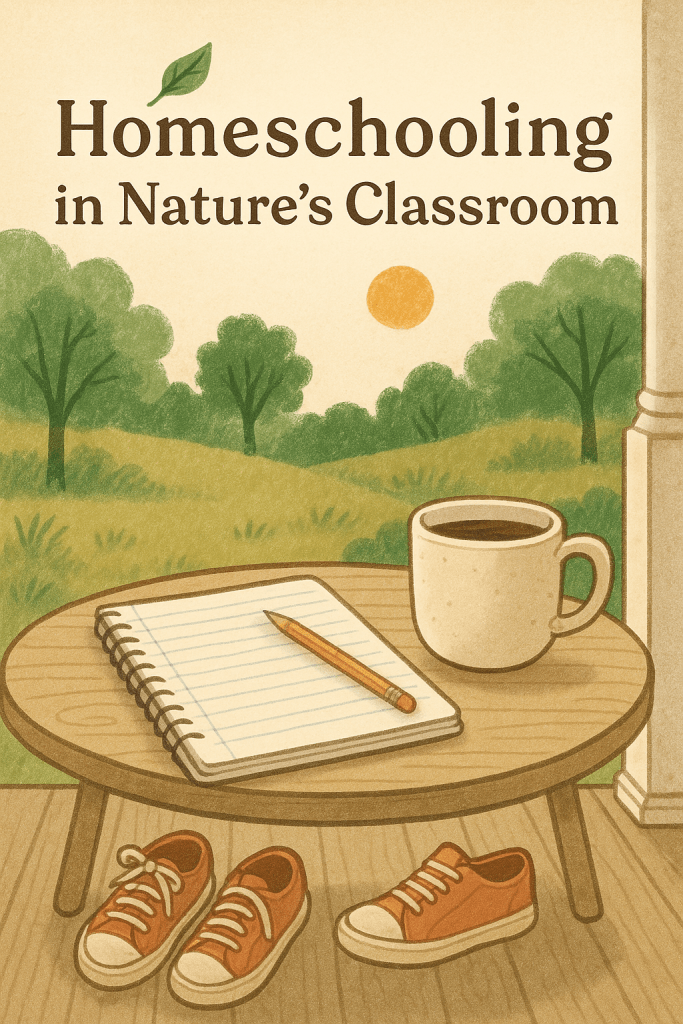
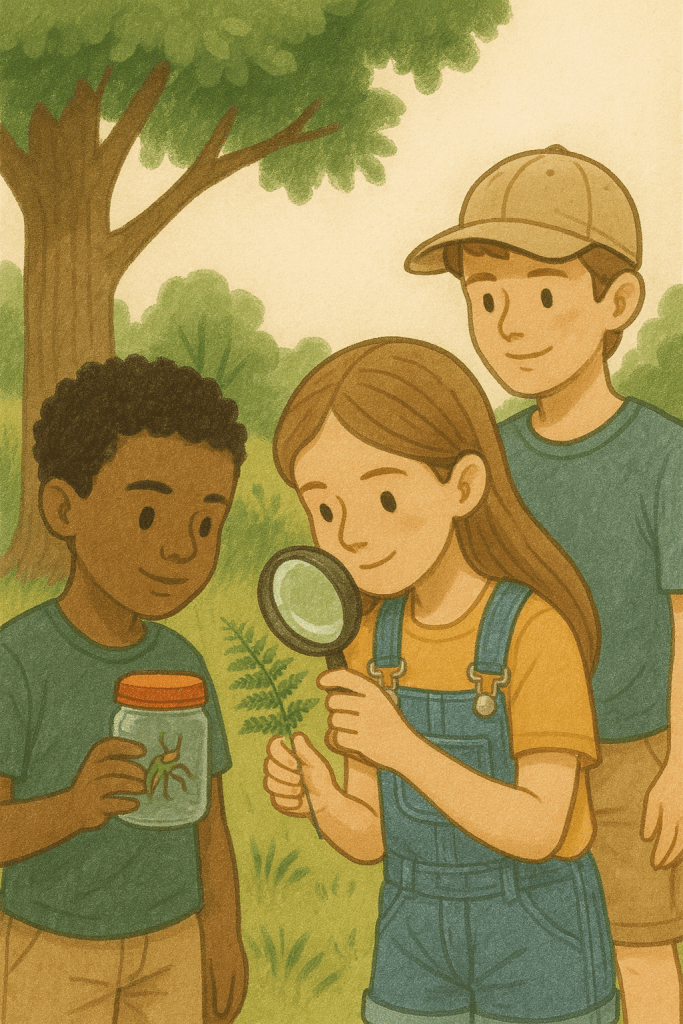
A walk down the neighborhood block can become a full science lesson. Channing listens to his audiobook while circling the sidewalks, learning multiplication tables with the rhythm of his footsteps. At the same time, he’ll stop to notice a squirrel darting up a tree or compare cloud shapes overhead. His body stays busy, and so does his mind.
Math in Motion
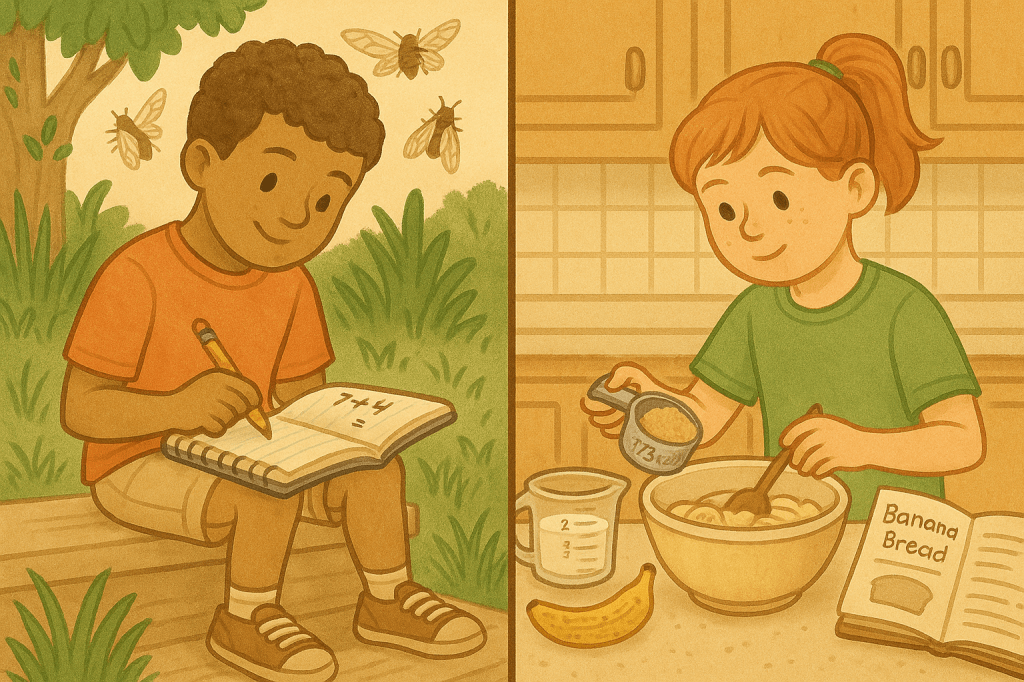
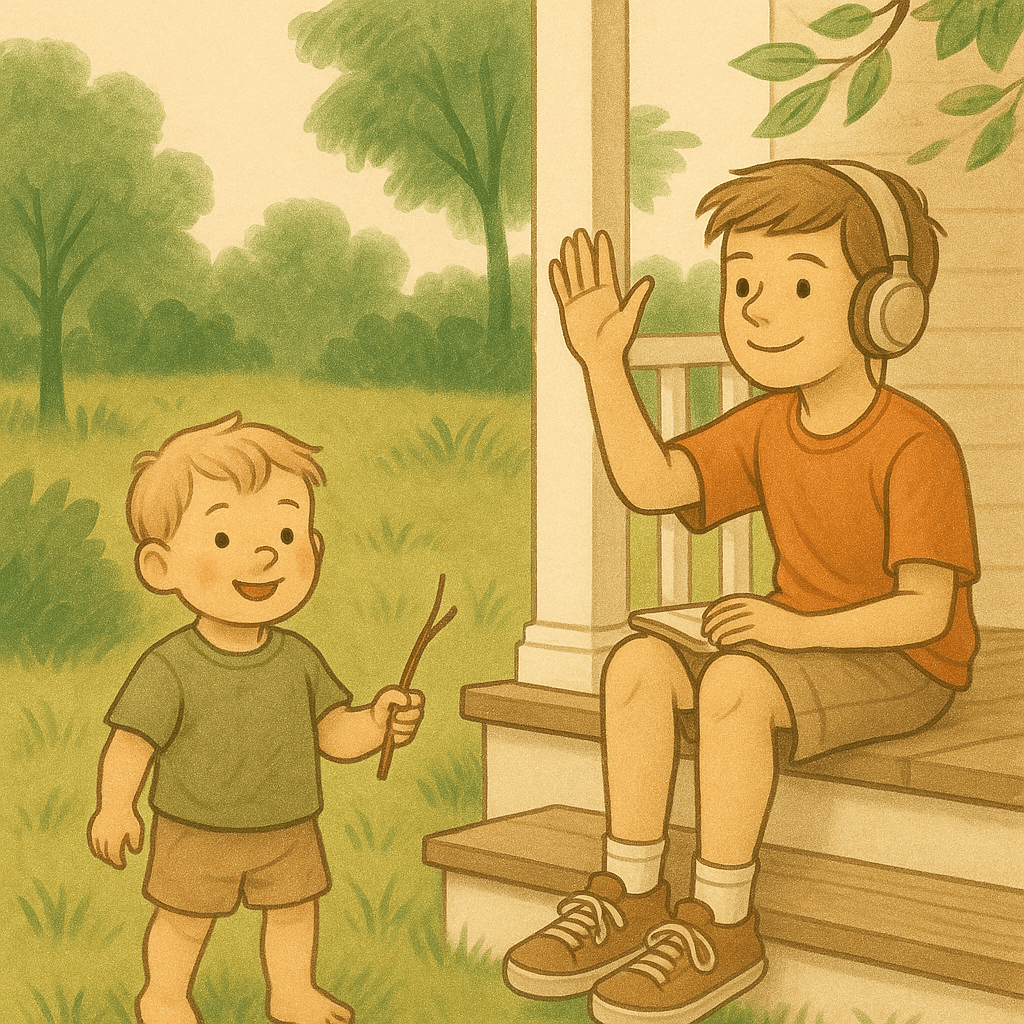
Math doesn’t always happen at a desk. On summer mornings, Channing carries his math outside to the porch. With a notebook balanced on his knees, the hum of cicadas becomes his background music while he works through equations. Sometimes we practice fractions with measuring cups while baking banana bread, then bring the lesson outside when we cut it into halves and quarters for a snack.
Language Arts in Daily Life
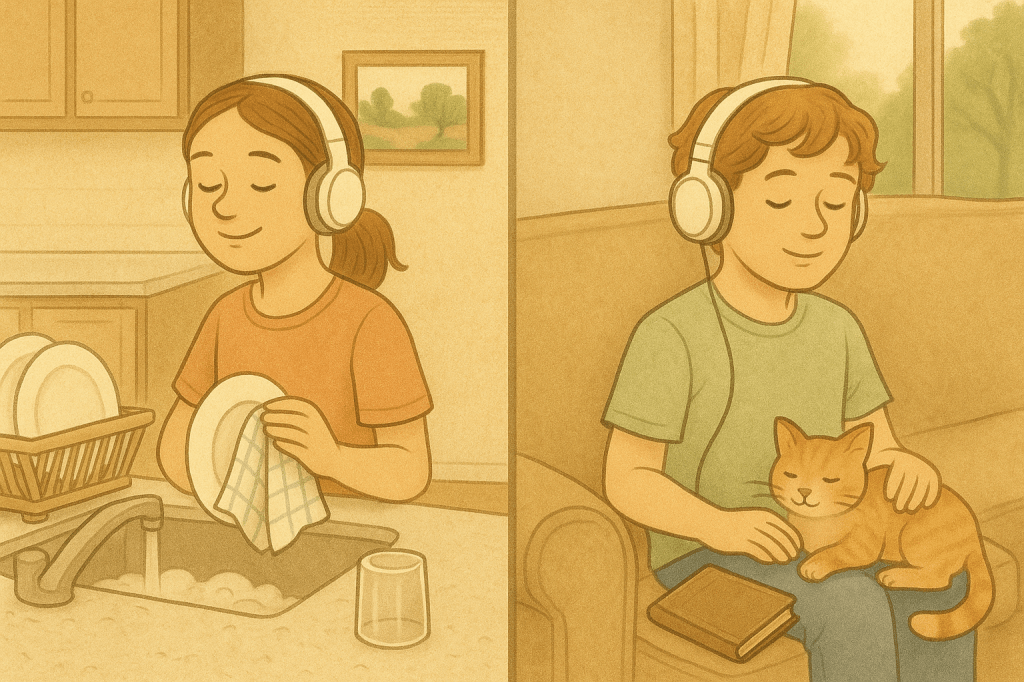
Audio learning has become a surprising tool in our house. Channing paces the block with a story in his ears, while Raeleigh slips in her earbuds and listens while washing dishes or folding laundry. What could be chores become chapters of a story, lessons in rhythm, and practice in listening comprehension. For both of them, movement and tasks paired with storytelling sink lessons deeper than sitting still ever could.
Sensory Regulation Outdoors
Royce, our youngest, proves that nature is regulation in its simplest form. On tough days, even stepping onto the porch is enough to shift his mood. The breeze, the sounds of traffic mixed with birds, the freedom of space — all of it calms him faster than any toy or cartoon inside. To him, the front porch is an adventure waiting to happen, whether he’s waving at neighbors or collecting rocks in his tiny fists.
Imagination & Sensory Rhythms
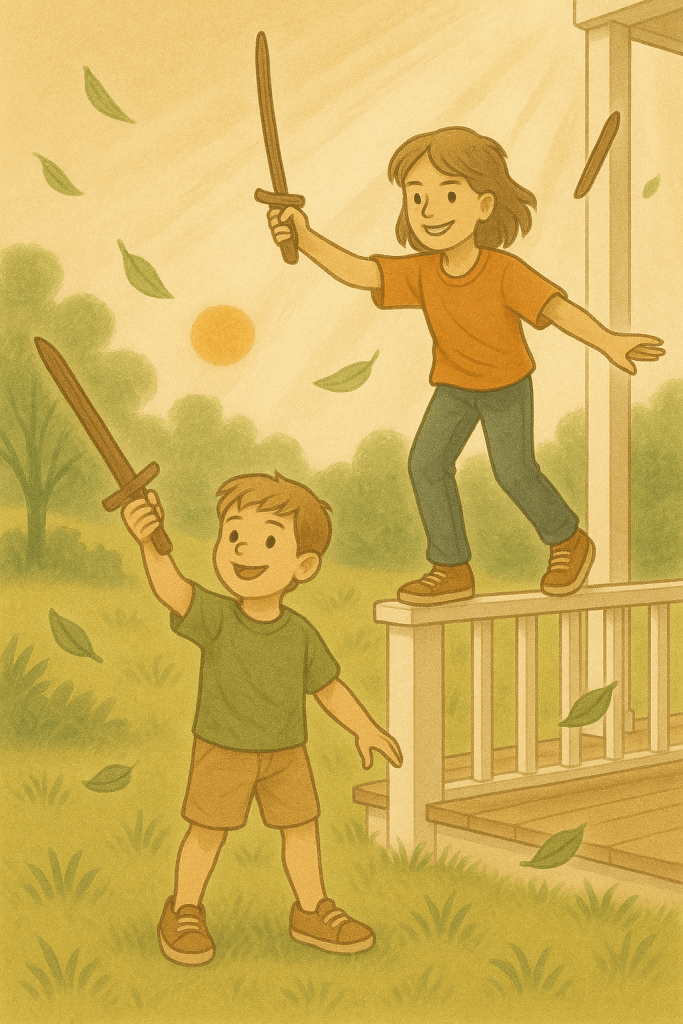
Outdoors offers a chance to stretch our imaginations in ways four walls can’t contain. A stick becomes a wizard’s staff, the porch railing turns into a balance beam, and the trees down the block transform into a forest kingdom. Even simple front-yard play sparks the kind of creativity no worksheet can reproduce.
Nature also carries its own rhythm: gentle, steady, and grounding. The rustle of leaves, the rise and fall of cicadas, the swing of a porch chair — it all regulates our sensory needs in a way that fluorescent lights and screen time never could. When emotions run high, the outdoors softens the edges. When focus drifts, it offers a calm background hum that draws us back.
Taking School Along for the Ride
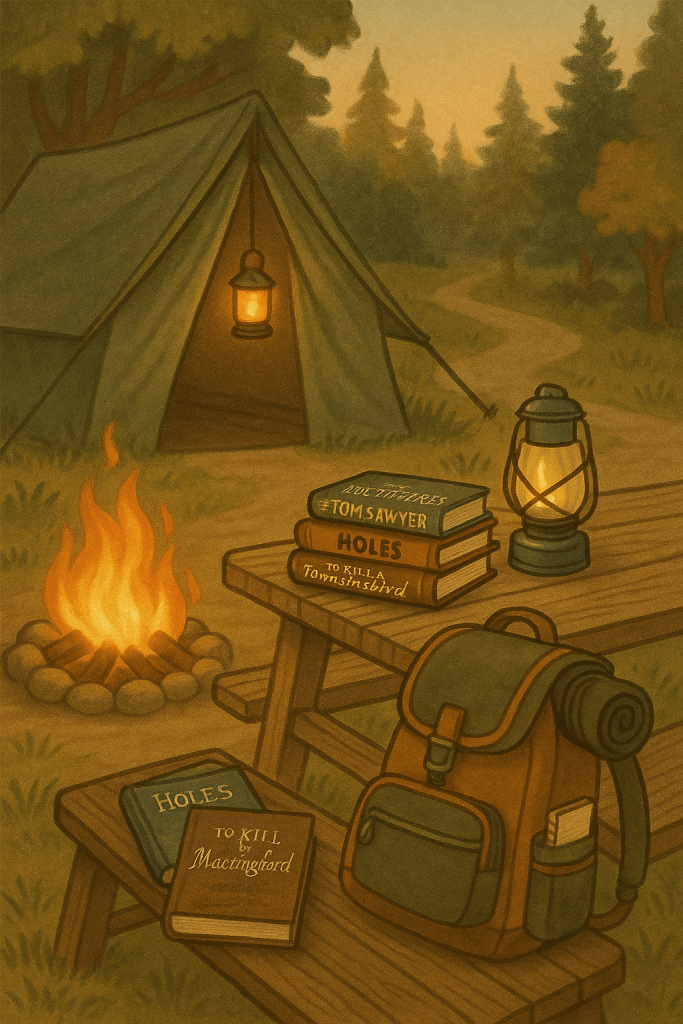
Things that we normally do inside can often be carried outside with us. Math worksheets feel different on the porch. Reading time sinks in deeper under a shady tree. And when we go camping, we just take some assignments along. A few notebooks, pencils, and audiobooks pack easily beside the marshmallows.
Thy and I both dislike camping in the heat of summer, so we usually plan our trips in spring and fall, the perfect seasons to learn under the changing trees and crisp air. Packing up schoolwork and bringing it along means lessons become part of the adventure, not something separate from it.
Learning Through Local Resources
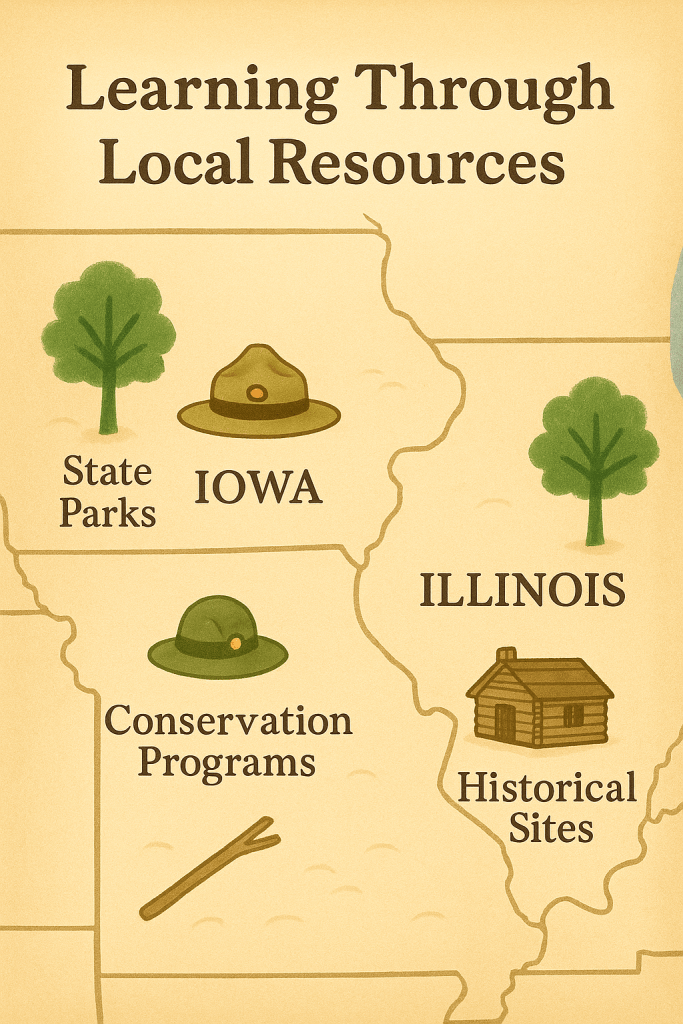
We also take advantage of what our community and state offer. Conservation interpretive programs give the kids a chance to meet naturalists, ask questions, and see wildlife up close. State parks become living science labs, and historical sites transform into hands-on history lessons. The world around us becomes the classroom, full of teachers we might never find in a book.
Affordability and Accessibility
Homeschooling doesn’t have to mean expensive curriculums or elaborate field trips. A neighborhood walk, a backyard, or a park down the road can open a world of lessons. And for families like ours, accessibility matters: a bench along the sidewalk, a paved path, or a ramp at the library can be the difference between joining in and sitting out. The small details make nature’s classroom available to everyone.
Closing Reflection
Our homeschooling doesn’t always look polished. It’s not color-coordinated binders or perfect lesson plans. It’s porch math, audiobook walks, chores with earbuds in, calming a toddler on the front steps, and packing assignments for camping trips. It’s listening to rangers explain the ecosystem, watching kids reenact history on a battlefield, or just sitting in the rhythm of cicadas while fractions get solved.
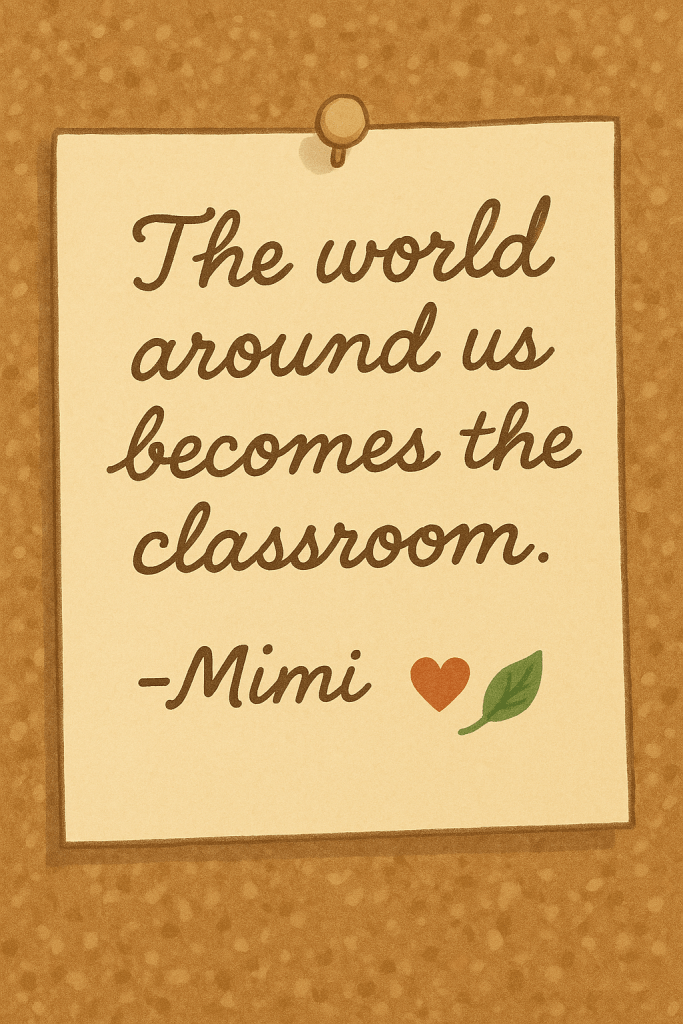
The world around us becomes the classroom. Out here, the lessons are everywhere, waiting in the wind, the water, and the wonder of ordinary days.
Mimi ❤️🌿
 Midwest Mimi
Leave a comment