Some days, talking just isn’t how we communicate.
Not because we don’t have anything to say, but because conversation isn’t always possible when we’re overwhelmed.
In our family, neurodivergence shows up in so many different ways.
Each of us is wired a little differently, carrying our own blend of ADHD, autism, chronic pain, depression, or bipolar disorder. What overwhelms one of us might soothe another. What helps one day might backfire the next. There’s no one-size-fits-all here; just a whole lot of learning, unlearning, and trying again.
And all of that shows up in real, messy, everyday ways: overwhelm, silence, big feelings, loud sobs, picking fights, blank stares, oversleeping, dissociation, and quiet tears.
Sometimes we need space. Sometimes we need movement.
Sometimes we just need to get out before someone throws a sandal across the kitchen—and yes, that’s happened.
That’s when we go outside.
Not to fix anything, but to feel something real.
Something steady.
Something that doesn’t ask for explanations or require eye contact.
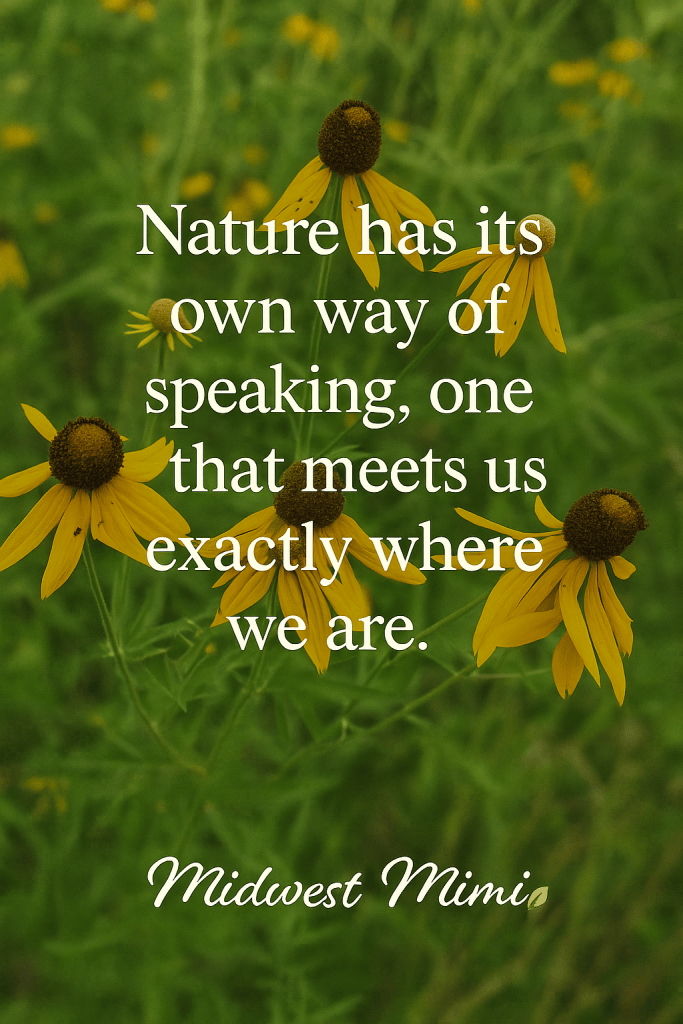
Because nature has its own way of speaking, one that meets us exactly where we are.
I didn’t always know that.
But my mom did.
When my daughter Raeleigh was little and would lose control of her emotions, my mom would scoop her up and carry her outside.
She’d say, “The change of pace will do her good.”
And she was right. But I’ve learned it goes even deeper.
It’s not just a change of scenery.
It’s a shift in the sensory language around us.
Nature doesn’t just distract us. It grounds us.
It soothes in ways we can feel before we even have words for it.
Nature Speaks in a Language Our Bodies Understand
It’s not English.
It’s not even words.
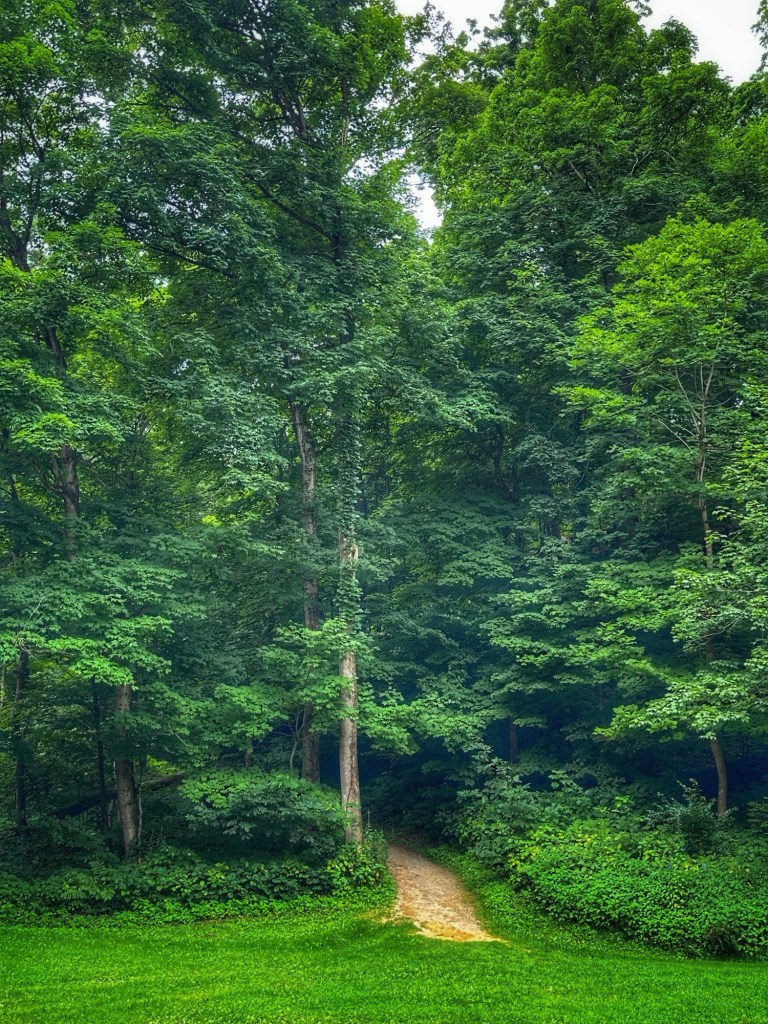
It’s the crunch of gravel underfoot that helps my son feel steady when his world is spinning.
It’s the sun warming my shoulders after a morning of feeling flat and numb.
It’s the way my daughter explores the trees like they’re hiding treasures left behind just for her to find.
Nature speaks to our bodies before it ever reaches our brains.
When everything inside is tangled, buzzing, or shut down, the outdoors doesn’t expect conversation.
It just exists.
Alive. Sensory. Inviting. Forgiving.
And it never asks you to smile, make small talk, or pretend you’re fine when you’re not.
The Sensory Buffet We Actually Like
Most of the time, the world overwhelms us.
Too many people. Too many lights. Too many rules.
(And all the self-flushing toilets are too loud, too soon, and entirely untrustworthy.)
But nature is different.
It’s not sterile or silent. It’s rich and full, but in a way we can actually handle.
There’s rhythm. Texture. Movement.
There’s room to go at our own pace—even if that pace includes a 20-minute meltdown halfway down the trail while holding a beef jerky stick like a tiny emotional support sword.
There’s the cold splash of creek water.
The smell of cedar and damp leaves.
The sound of birds having entire conversations that don’t involve us at all.
There’s dirt under fingernails, pine needles stuck to socks, and wind that tickles or roars.
And that mess is a gift, especially on days when nobody has the capacity for a color-coordinated, Instagram-worthy moment.
When Words Don’t Work, We Go Outside
When my son can’t explain what’s wrong, we walk.
When I’m overstimulated and one whiny question away from snapping, I sit in the shade and listen to the world around me.
When one of my kids is melting down and every word I say makes it worse,
Sometimes the only thing that helps is climbing a fallen log or stomping through leaves like a woodland Godzilla.
Nature doesn’t correct us.
It doesn’t tell us to “use your words.”
It doesn’t assume we’re rude when we’re actually running on fumes.
It simply shows up. Full of sensory input, open-ended invitations, and zero judgment.
And it never comments on how much dry shampoo is holding your hair together.
This Is Why We Keep Going Outside
Not because we’re trying to be “outdoorsy.”
Not because we’re trying to impress anyone.
Not because we’re hoping to be that family in the hiking boots ad.
(We’re never all wearing shoes at the same time anyway.)
We go outside because our bodies understand the world better out there.
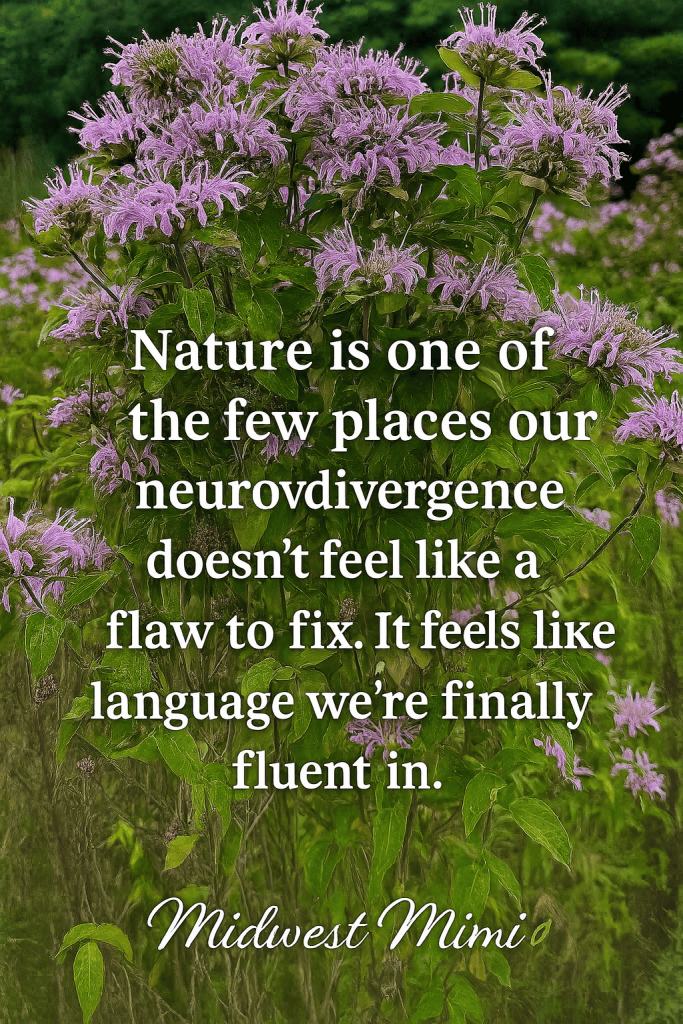
Nature is one of the few places where our neurodivergence doesn’t feel like a flaw to fix.
It feels like a language we’re finally fluent in.
And in that language, we rest.
We recover.
We connect with each other, with the world, and with ourselves.
🌿❤️ Mimi
 Midwest Mimi