When someone in your family is struggling with their mental health, it doesn’t just affect them—it ripples through the entire household. Routines shift. Emotions spike. The energy in your home changes.
And if you’re a caregiver, a parent, or both, those waves often crash right into you—while you’re still trying to keep the boat steady for everyone else.
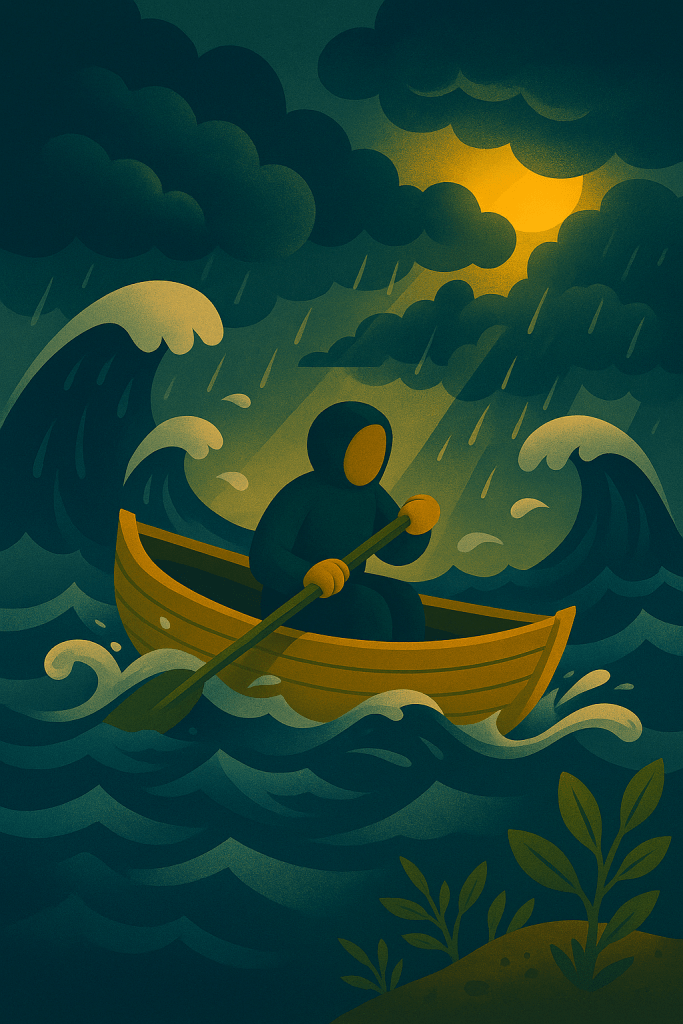
Trying to hold steady when the waves keep crashing in—this is what it feels like to parent, to care for a partner, to survive a storm with your whole family in the boat. The sea is wild, but we keep rowing. Together.
This past week, my wife Thy has been in the hospital. She lives with Bipolar 1 disorder, and when a manic episode escalates, she sometimes needs inpatient support to stabilize. She’s also been physically sick, so her care has been more complex this time.
I’m not going to share too many details out of respect for her privacy—but I will say this: it’s been one of those weeks where everything feels like too much.
And when life tilts like this, here’s what I’ve learned: if I don’t ground myself, everything else gets shakier, faster.
Mental Health Isn’t Isolated—It Impacts the Whole Family
In families—especially neurodivergent households like ours—stability matters. Routine matters. Predictability matters.
So when someone we love is in crisis, that disruption doesn’t just affect them. It throws off the whole system.
My own chronic illness and sensory needs don’t pause just because I’m in crisis mode. My kids’ needs don’t shrink—they often grow. Their anxiety spikes. Their regulation gets harder. Their sense of safety wavers.
This isn’t because they’re selfish or fragile.
It’s because they love their mom.
And because change is hard—especially for neurodivergent brains.
What Staying Grounded Actually Looks Like
I don’t have the luxury of falling apart, but I also know better than to fake being fine.
Instead, I focus on small, repeatable practices that keep me tethered to myself—things that steady me when the world feels wobbly.
Here’s what grounding looks like in my real life:
Checking in with myself — Have I eaten? Slept? Taken my meds? I can’t pour from an empty cup.
Letting the kids help — not in ways that burden them, but in ways that give them purpose. Stirring dinner, feeding the cats, starting a load of laundry—it grounds them, too.
Taking a nap when I can — even if it’s only 20 minutes with the baby monitor next to me.
Making time for art — even just scribbling in a sketchbook or playing with color calms my nervous system.
Getting outside — even for five minutes. Sometimes it’s a short walk. Sometimes it’s just taking turns on the porch. Fresh air is medicine.
A Porch. A Breeze. And Permission to Breathe.

Sometimes healing starts with a breeze and a quiet place to sit. This porch was my reset button this week—a moment to breathe, feel the sun, and remember I’m not alone.
One of the most healing moments this week came when I called my sister-in-law and said:
“I just need to get out of the house.”
So I did.
We sat on her porch, rocking in her chairs, letting the summer breeze brush past us.
We talked about everything and nothing.
We didn’t solve the world’s problems.
But we listened to birds.
We felt the sun on our faces.
We breathed.
And in that quiet moment, I remembered:
This is how I keep going.
My sister-in-law shared something with me as we rocked on her porch that day that has resonated with me since.
“Someone once told me, if you’re feeling overwhelmed and anxious, listen to the birds. When a storm is coming or there is danger, they quiet down or change their calls. But when they’re singing just to sing—when the world outside is full of chirps and chatter—it’s nature’s way of telling you it’s okay. You’re safe.”
So now, when I hear birdsong, I let it remind me:
There may be chaos in my life, but there is still peace in the world.
And for a moment, I can rest in that.
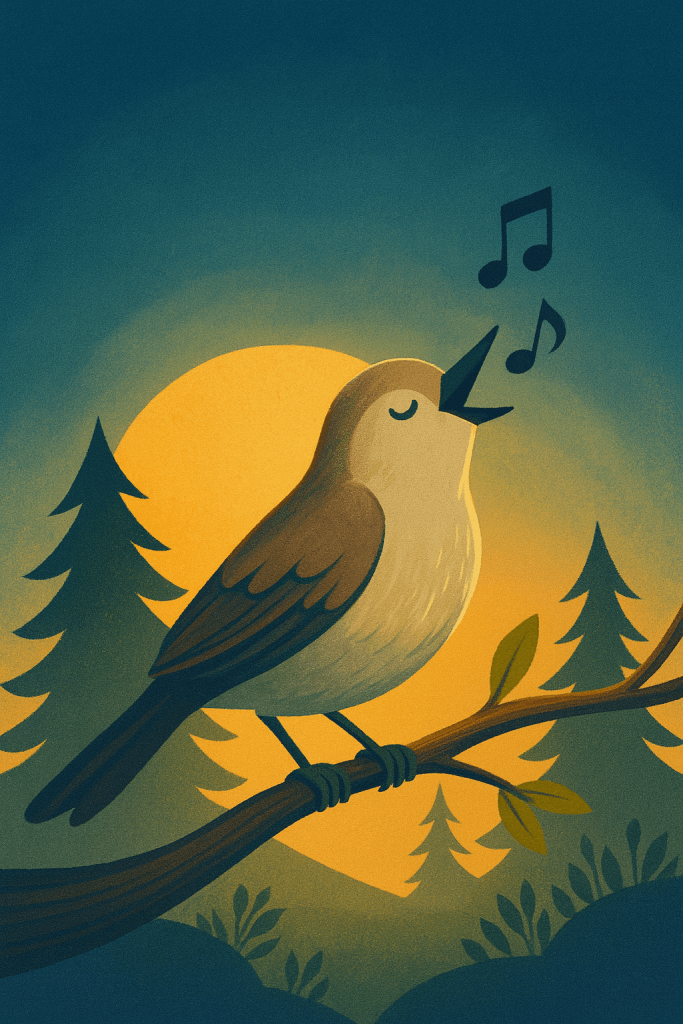
My sister-in-law told me, “If the birds are singing, it means it’s safe.” I think about that now when life gets heavy. If the birds haven’t gone quiet, the world is still holding me.
You Don’t Have to Do It All—Just the Next Right Thing
If you’re in a similar season, please hear this:
You are allowed to pause. You are allowed to take care of yourself. You are not failing your family by resting.
You are sustaining them—by showing up as a calmer, more grounded version of yourself.
Mental health crises are hard.
Loving someone with a chronic condition is hard.
Being the steady one in a storm is hard.
But you don’t have to do everything. You don’t even have to do most things.
Just choose one next right thing.
It doesn’t have to be profound.
It might be checking one thing off your to-do list just to remind yourself you can move forward.
It might be drinking a glass of water.
Folding a single load of laundry.
Taking a walk around the block.
Breaking it down into the smallest possible step is not a failure—it’s a strategy.
It’s a way to keep going when everything feels like too much.
And nature, in all its quiet wisdom, is still out there—waiting to hold you, even if just for a few minutes at a time.
Let’s Stay Grounded—Together
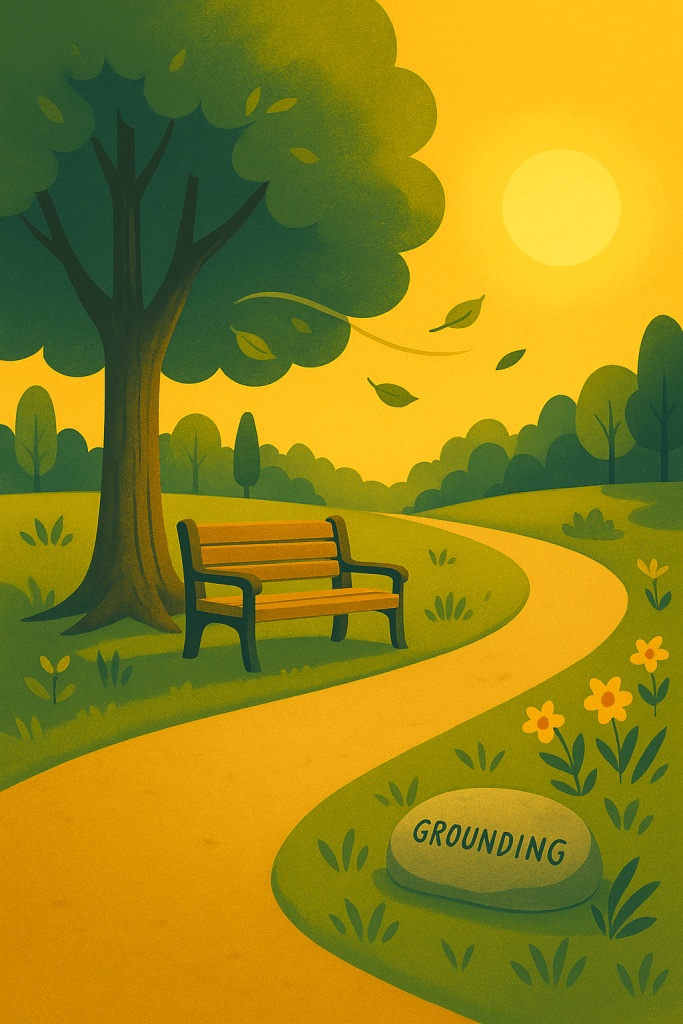
This is what grounding looks like to me—somewhere soft to land when everything else feels hard. Nature doesn’t ask me to be okay. It just lets me be.
If you’ve ever walked through something like this, I see you.
Feel free to share your own ways of staying grounded during hard seasons in the comments or connect with me over on Midwest Mimi’s Facebook page.
Let’s remind each other:
We don’t have to do it all.
We just have to keep going—together.
🌿❤️ Mimi
 Midwest Mimi